This was my first ever game built. An ambitious project to commence my game dev journey, nevertheless, I was able to complete it and learnt a lot. The project is meant to serve as a demo for a future full-length game I wish to develop, but during development I wished to push myself and designed more complicated mechanics for myself to implement. This resulted in what initially was meant to be a demo becoming a full-fledged standalone game.
In the future, I still wish to develop the full-length game but in the Unreal Engine.
For more gameplay footage, visit the project's Gamejolt page and scroll down to view the posts published throughout development
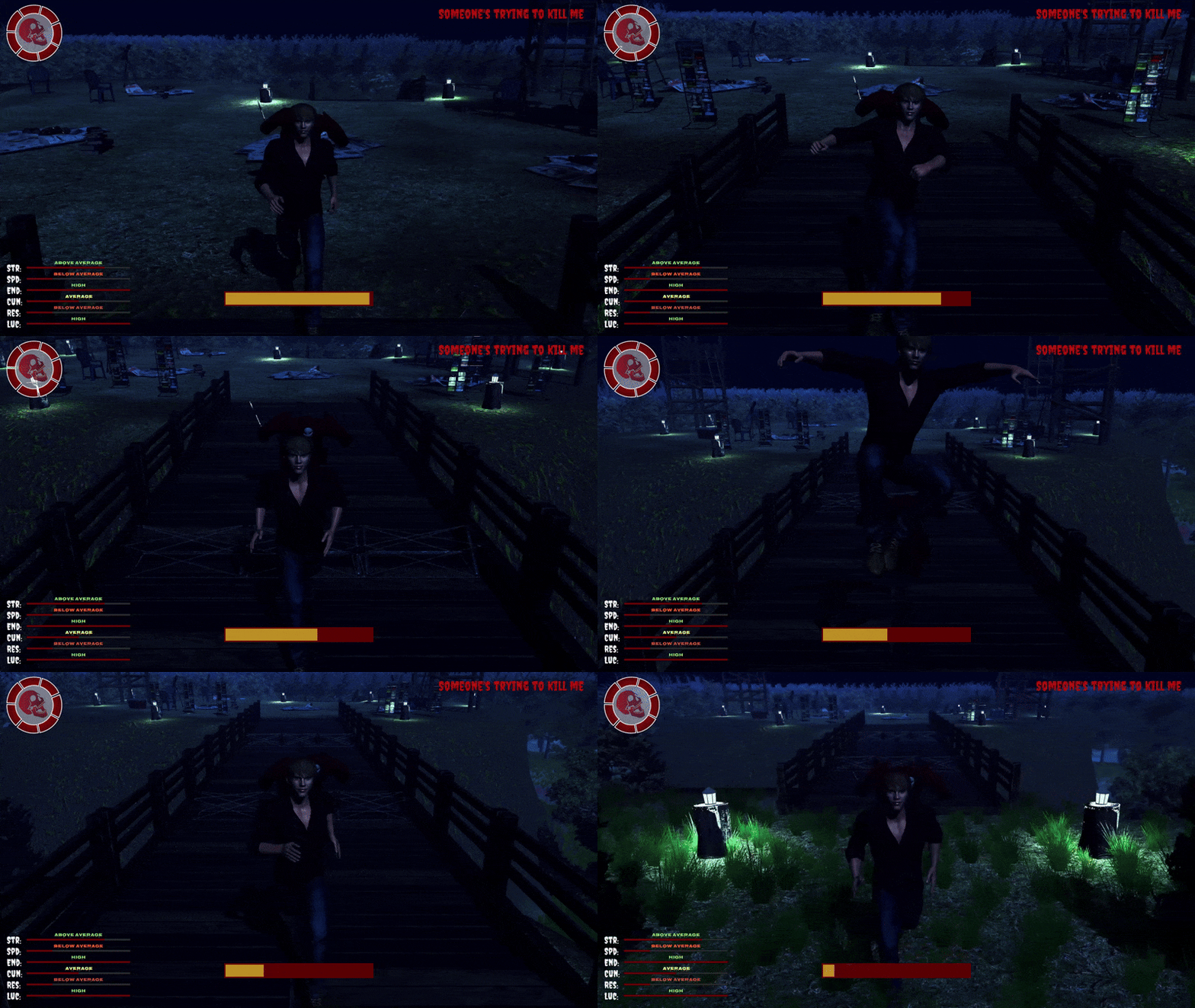
I implemented a character controller that includes walking, running, jumping, and crouching. Running consumes stamina and is disabled once stamina exhausted.
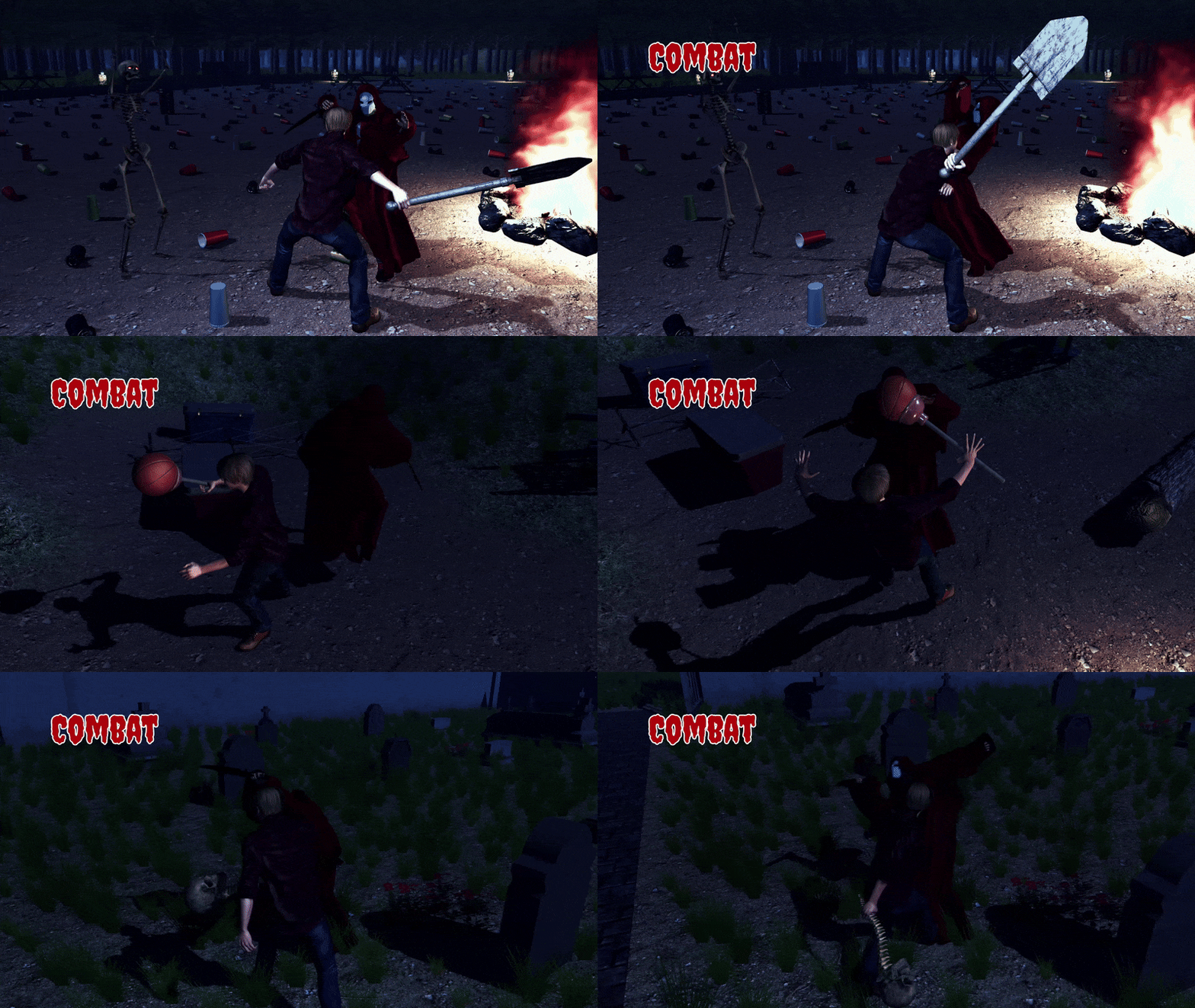
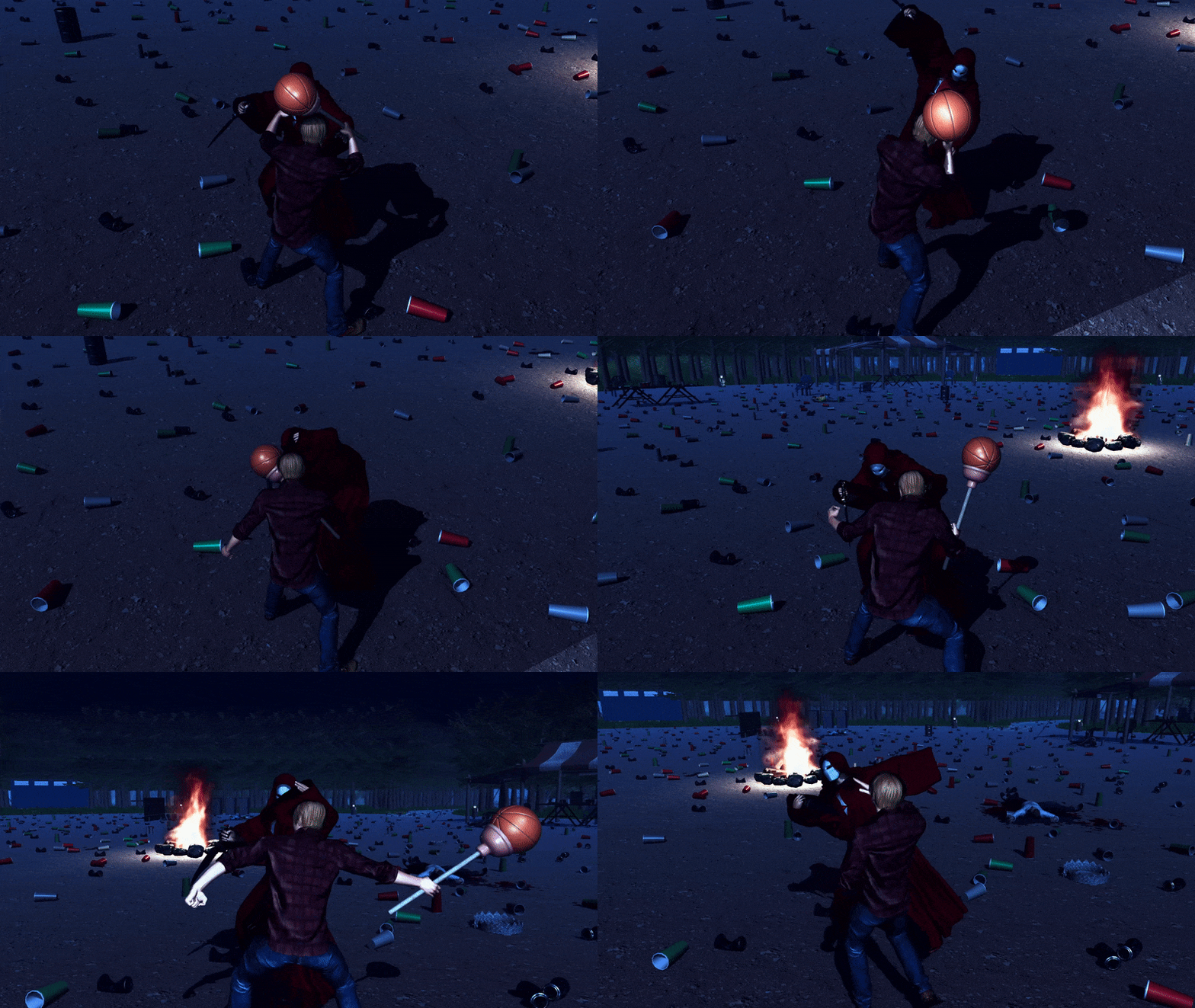
I implemented a responsive combat system with dodge and combo attacks. The combat supports armed and unarmed combat.
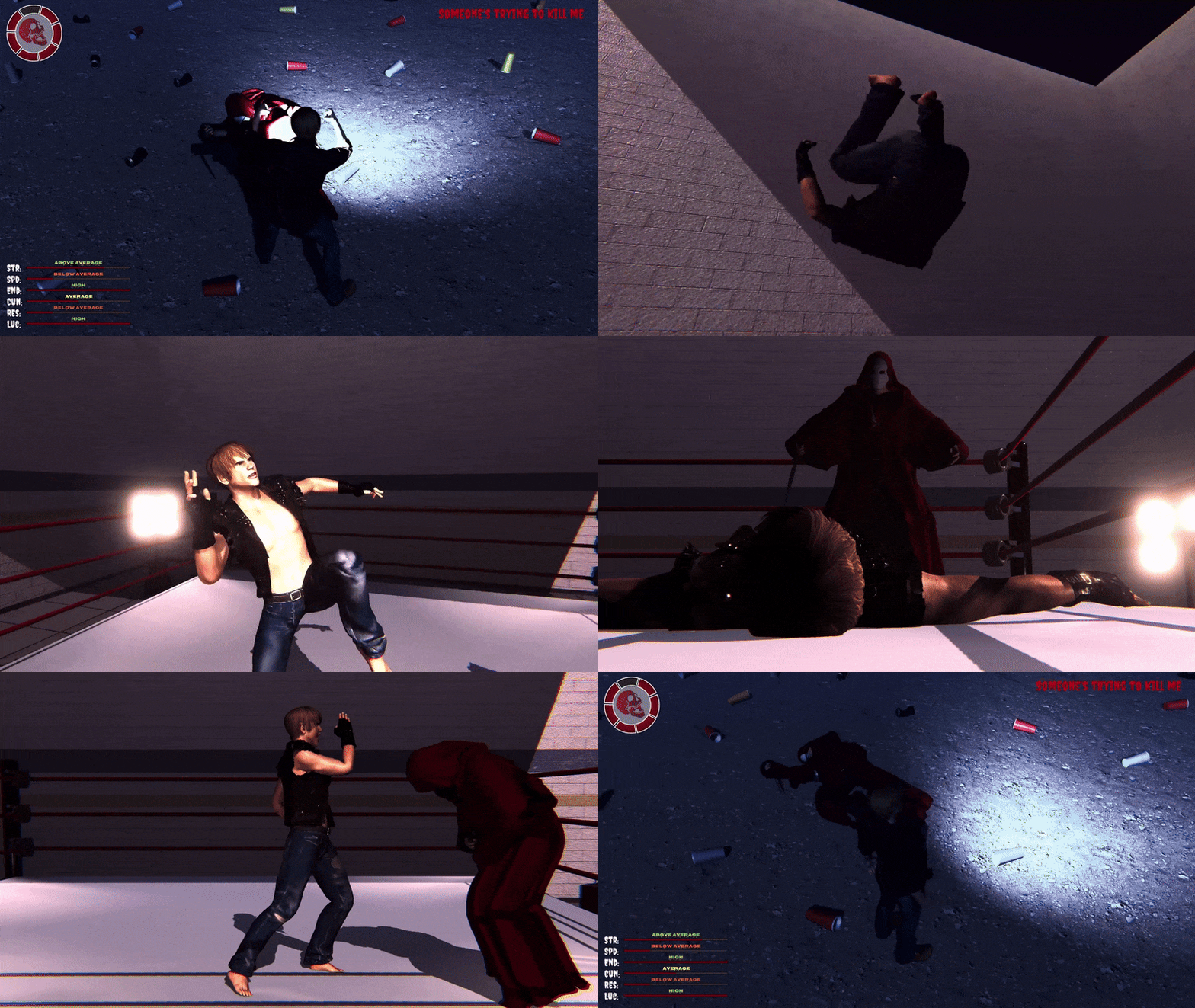
A cinematic finisher can be performed if player completes a four hit unarmed combo. The cinematic is played in a different scene and once completed, it unloads, returns to the main scene and knocks out the enemy.
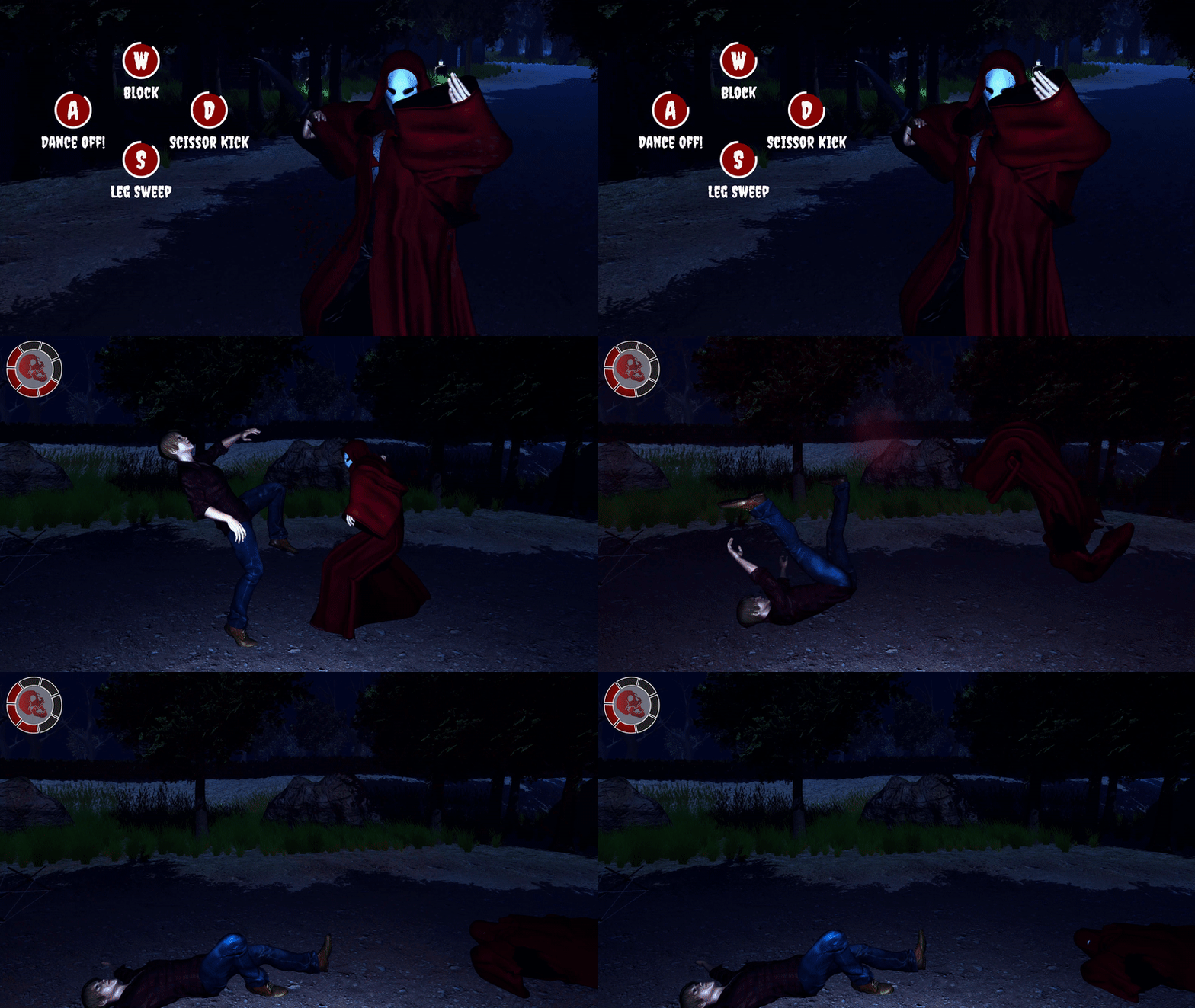
I implemented a mechanic known as “Struggle decision.” It occurs after the enemy drags the player from a hiding spot, out of a trap or is scripted by a cinematic. Four random options display, two correct and two incorrect. The player must choose a correct option within the time limit or one is automatically chosen. The choice’s respective cinematic triggers, and either the player escapes the struggle unscathed or the enemy takes one bar of their health.
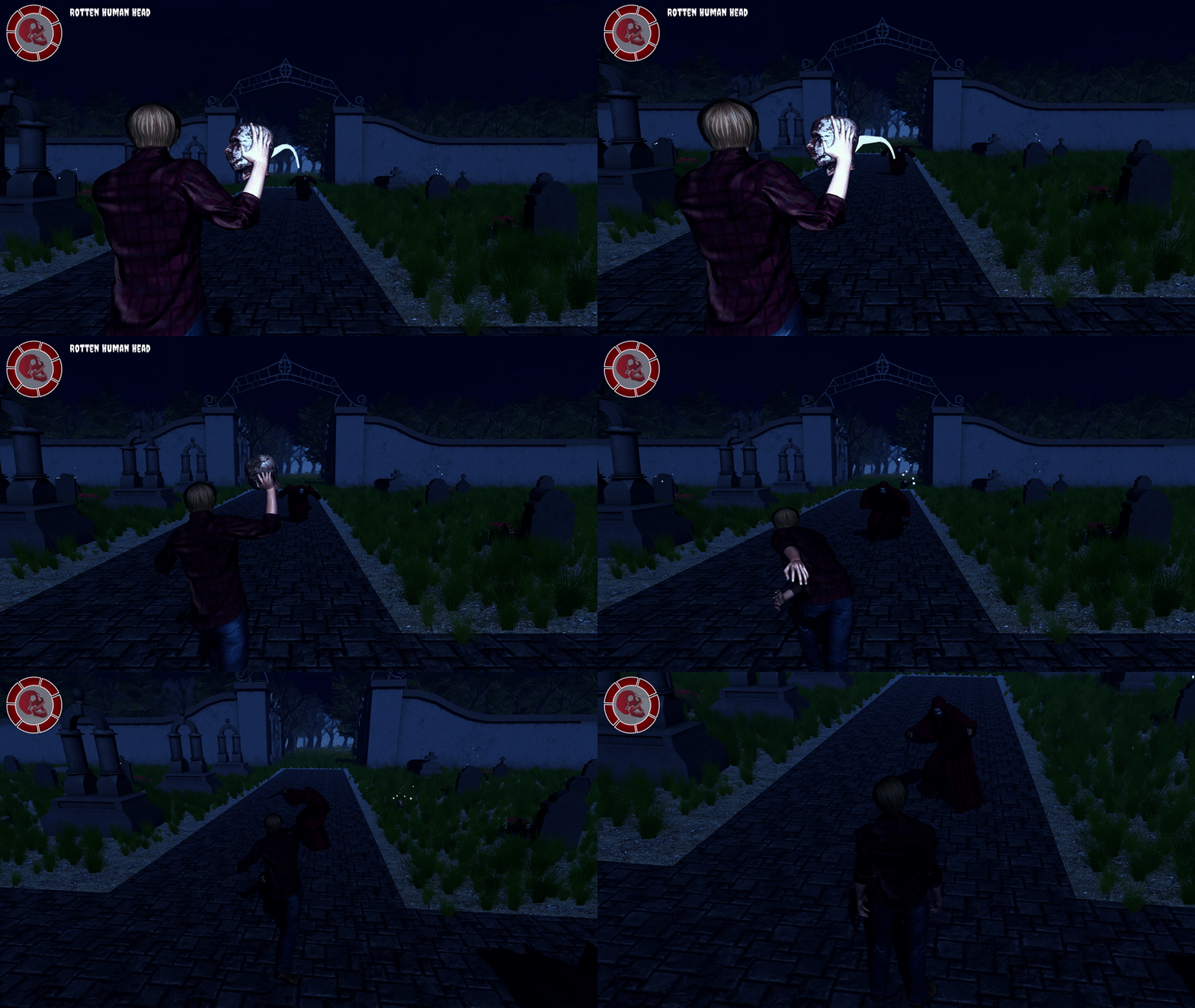
I implemented throwing. The UI displays the trajectory of the throw and its destination. Throwing can be used to distract the enemy or damage them by throwing an item at them.
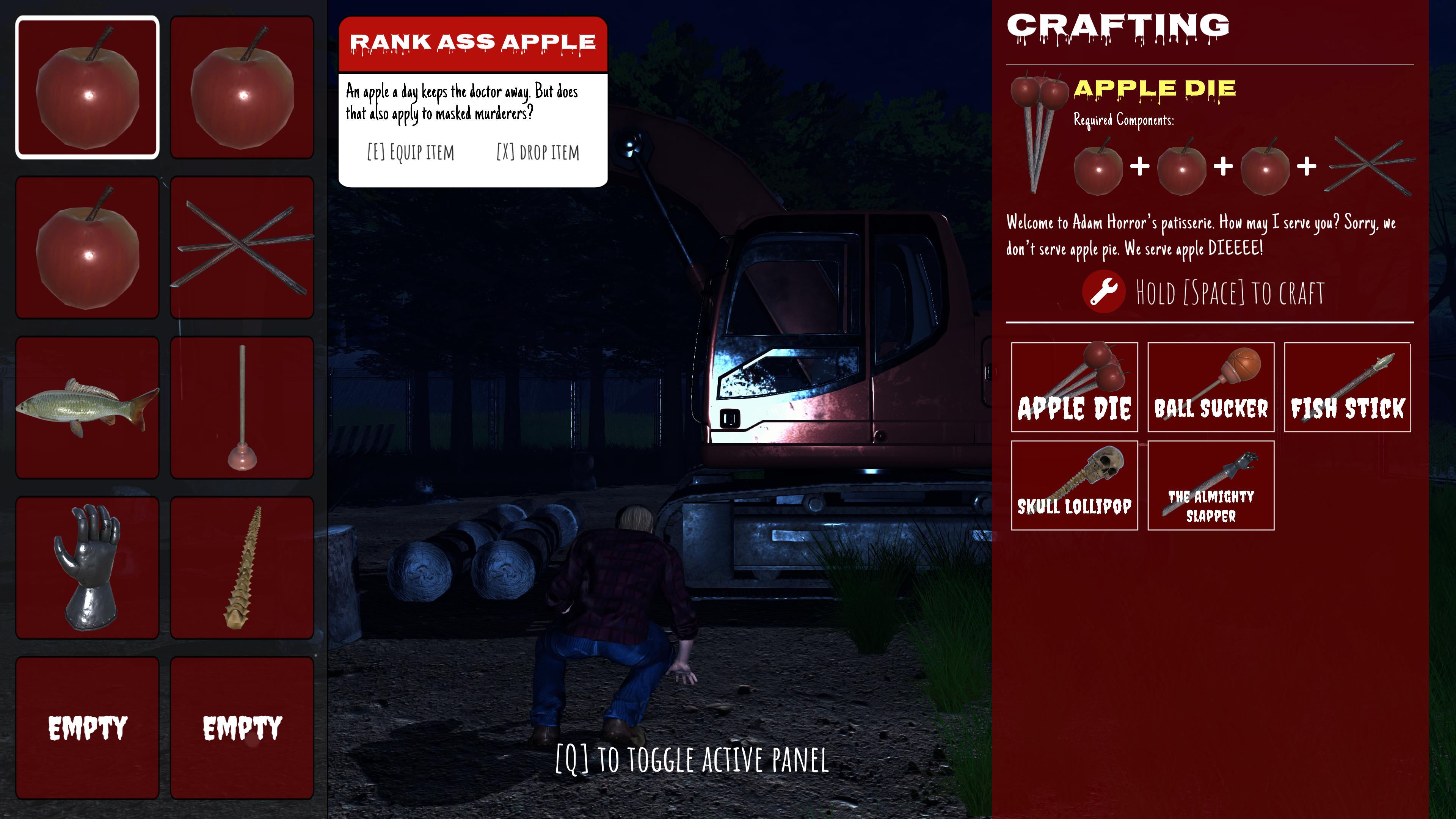
The player can collect components scattered around the environment. Crafting recipes are unlocked when player collects one of the required components. Once all components obtained, the player can combine them to create a good weapon.
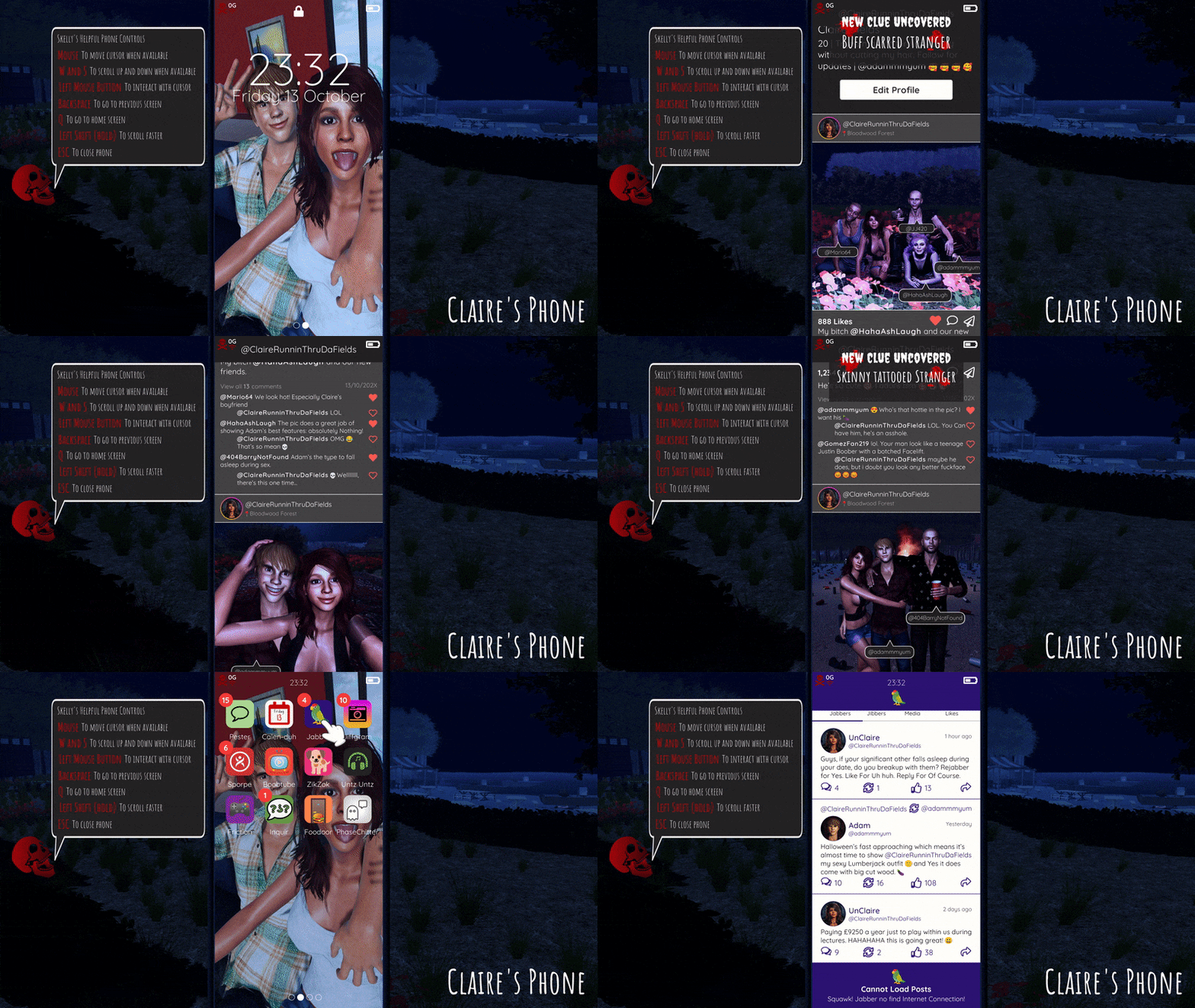
The phones of corpses can be investigated. I programmed phones to have multiple apps that can be opened and scrolled through to collect clues.
The enemy AI is programmed using a basic state design pattern with enums. The AI is programmed to patrol various areas and move to a new area when player enters it to ensure the enemy always remains “on top of the player.” The enemy also investigates suspicious noises, chases player when spots them, attacks player when in range, and investigates hiding spots if they last saw the player near one or enter it.
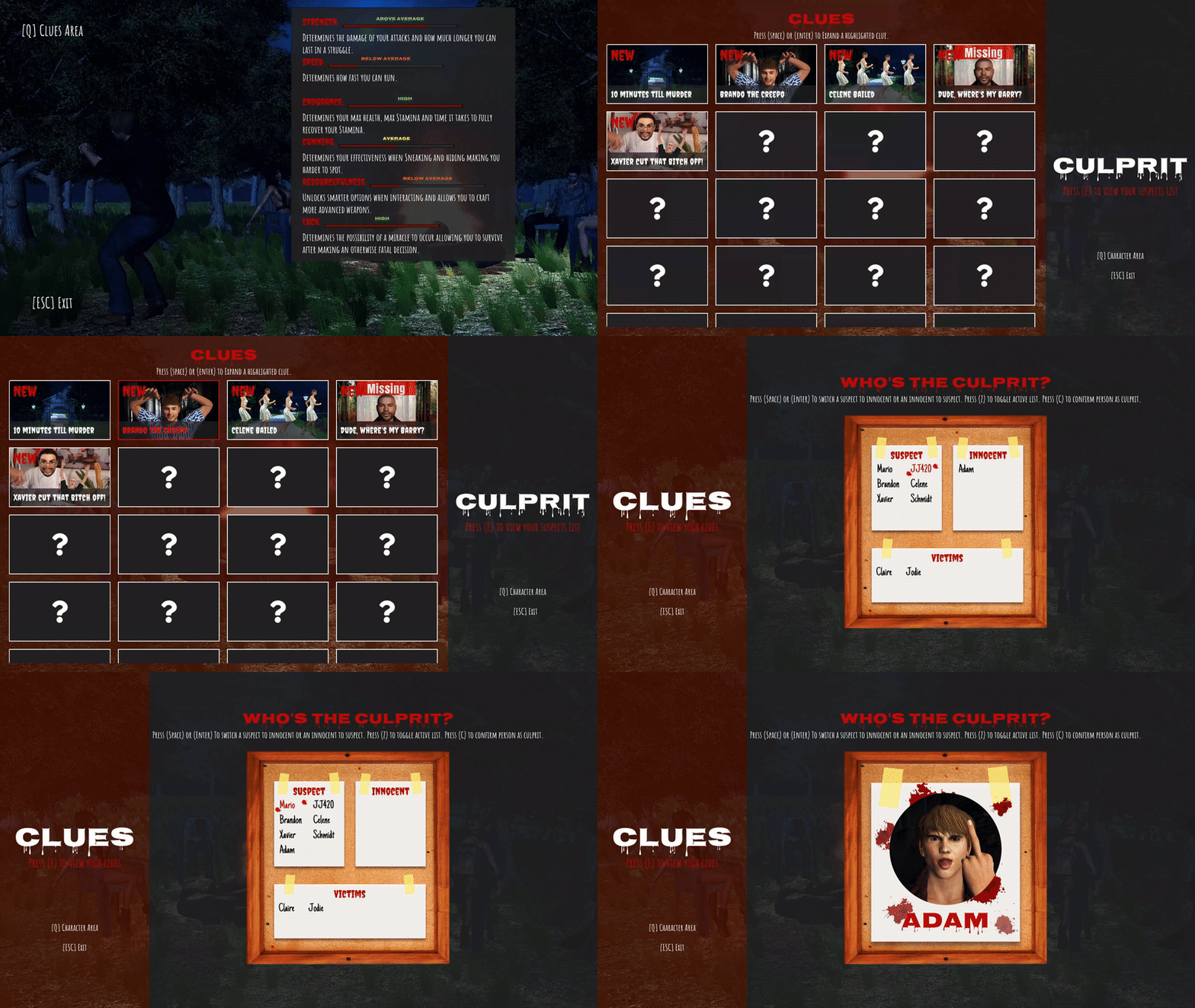
Throughout the environment, there are clues for the player to unearth. After scrolling to the specific section on an app or interacting with a key item such as a newspaper, a clue is either unlocked or updated with new info. The clue is added to a collection that the player can view by navigating to the clues UI. These clues can be used to confront the killer to unlock a secret ending.
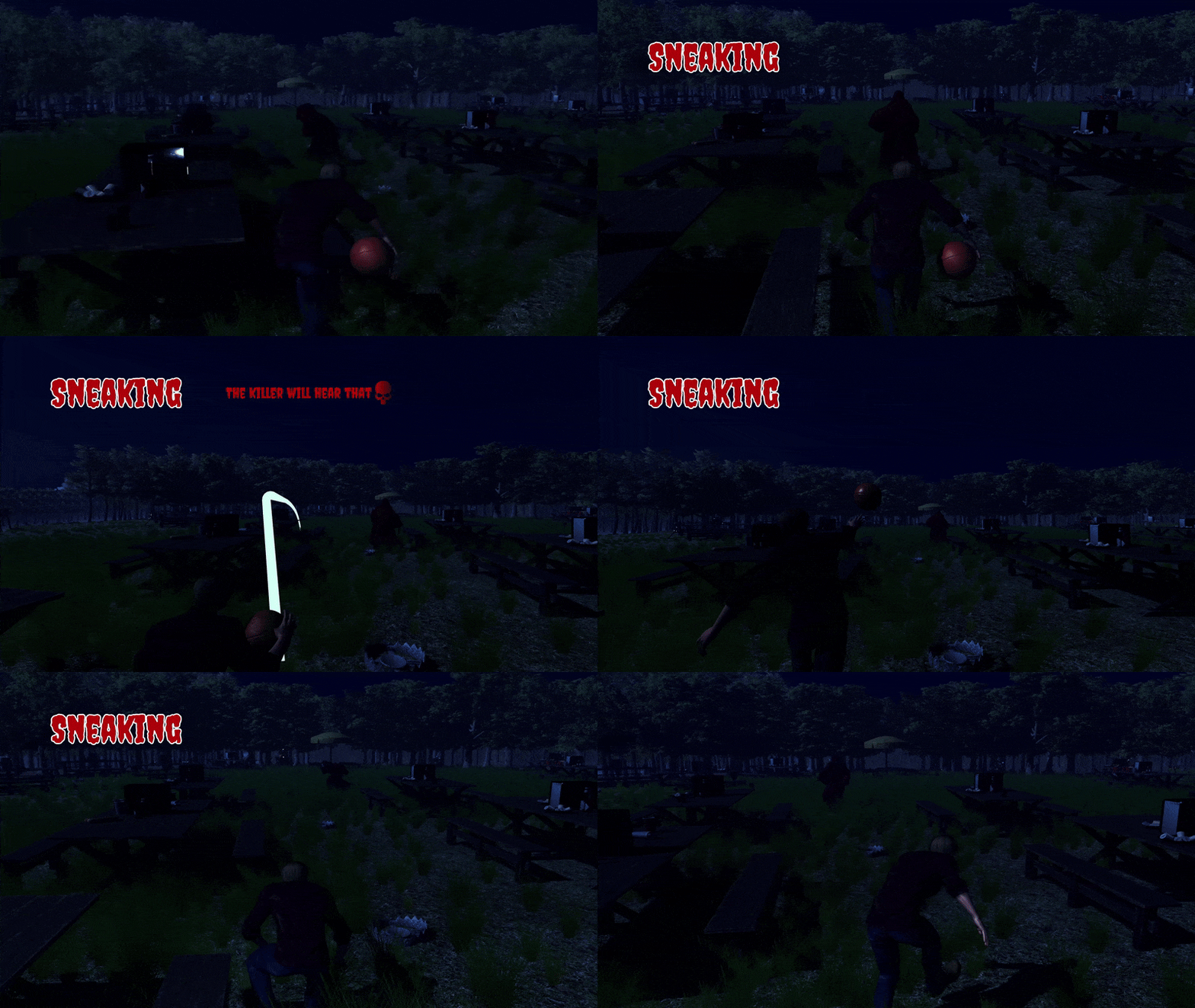
The enemy’s vision distance is split into two sectors: normal detection and stealth detection. Whilst crouching in the normal detection, the enemy cannot see you. They can only spot the player in stealth when within the stealth detection sector of their vision.
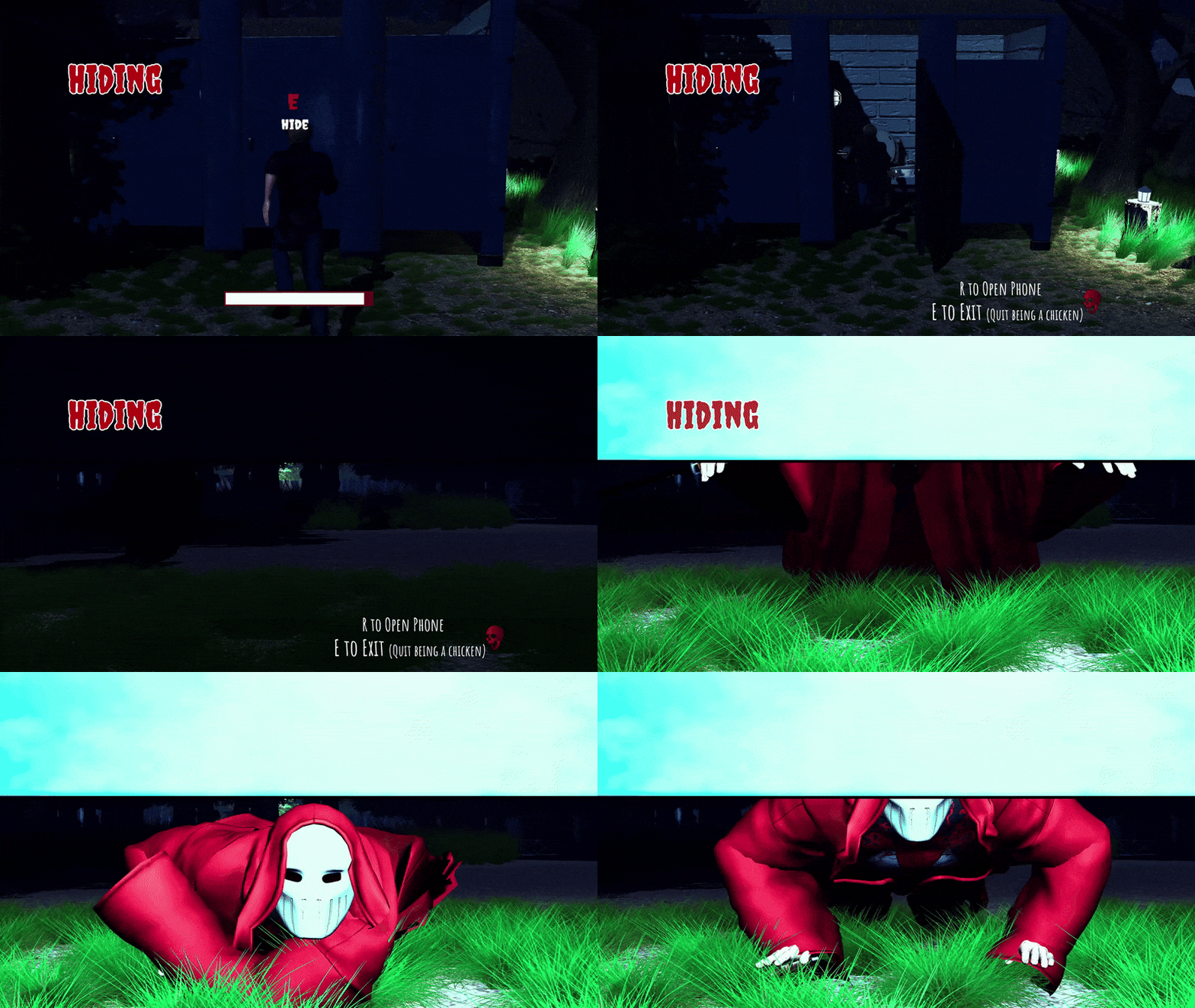
The player can interact with interiors in the environment to hide and lose the enemy. However, if the enemy sees them go into one, they will investigate the hiding spot and drag the player out. The enemy will occasionally investigate hiding spots while patrolling. The chance depends on the player’s luck stat.
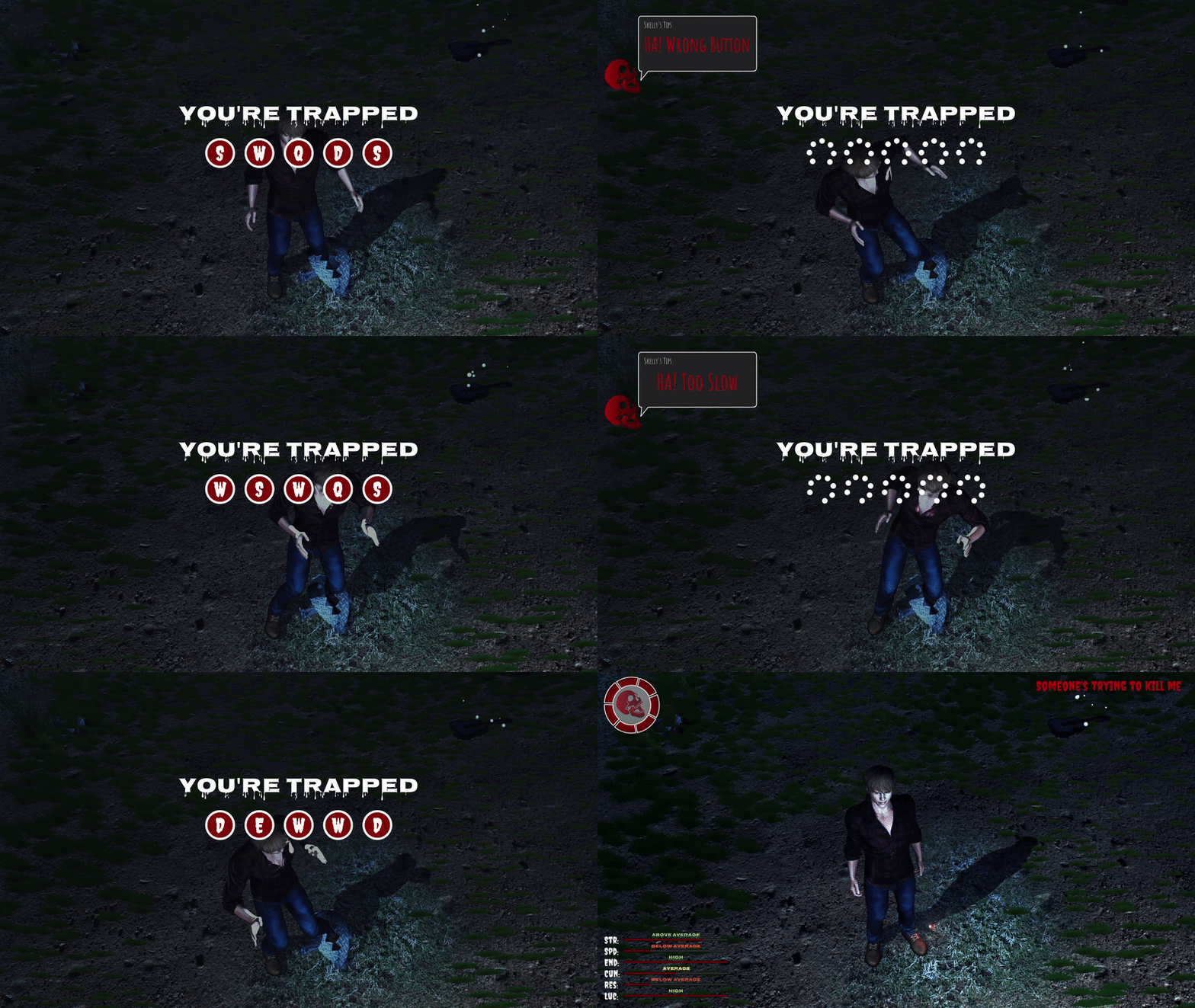
When the player steps in a bear trap, their movement is disabled and a minigame is triggered. They must correctly complete the input sequence within the time limit to free themselves. To ensure the player is not stuck there forever, after multiple failed attempts, the trap is automatically destroyed after a slow countdown. If the enemy spots the player in a bear trap, they will drag them out and a struggle will occur.
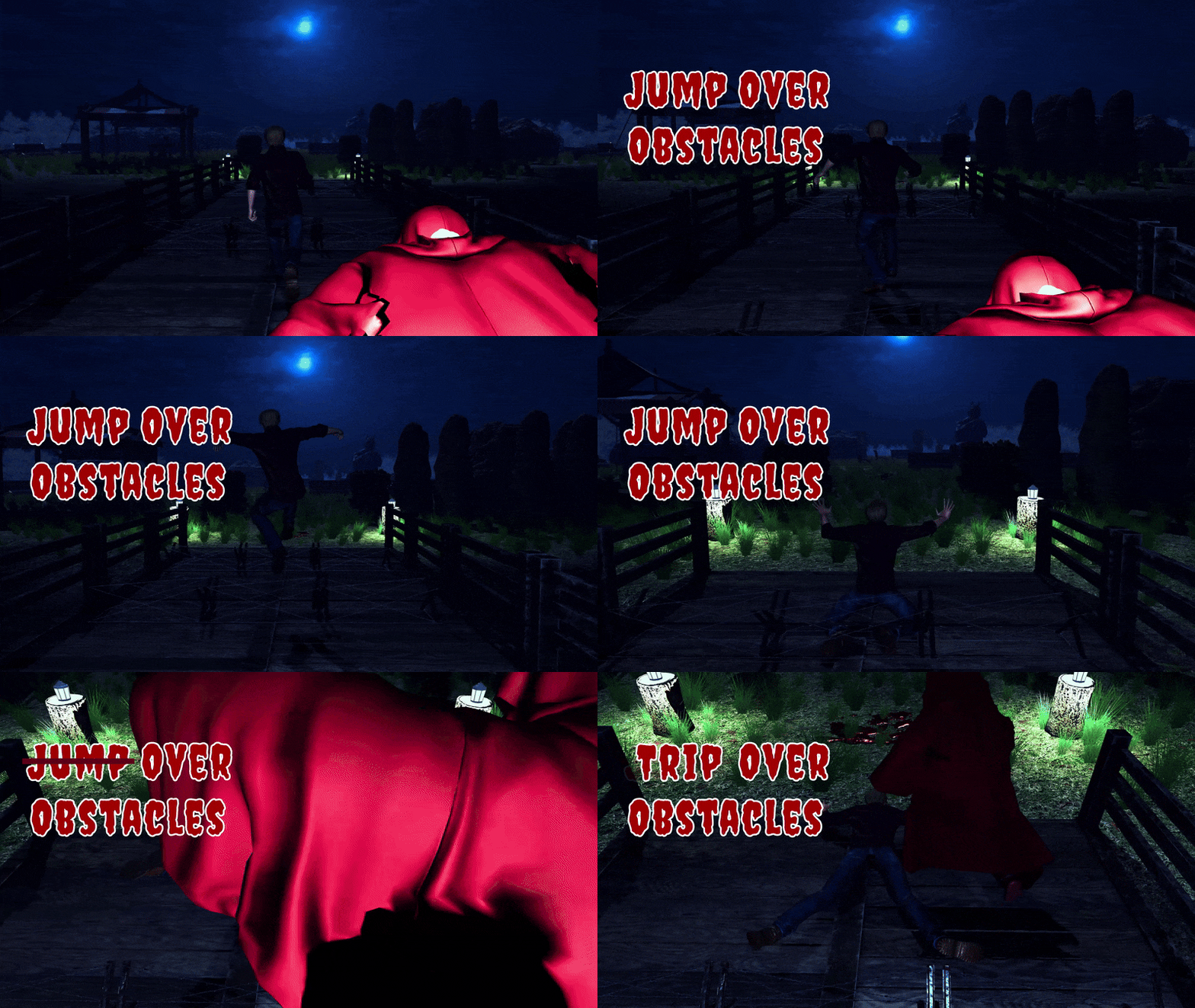
The wire trap emits a sound when the player walks through, triggering the enemy to immediately speed to the trap’s location. Additionally, if the player runs through the wire trap, they will trip slowing them down and allowing the enemy to catch up.
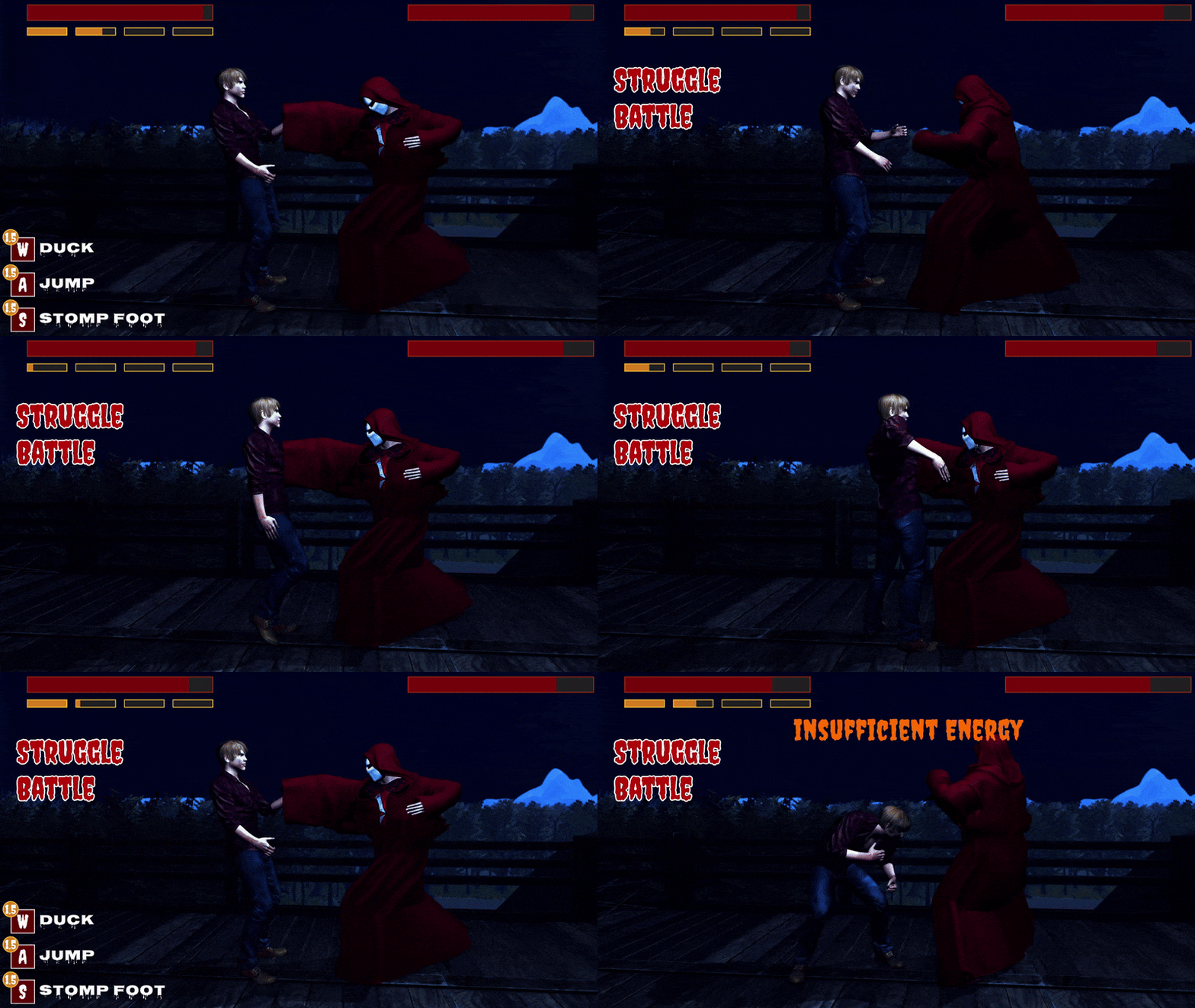
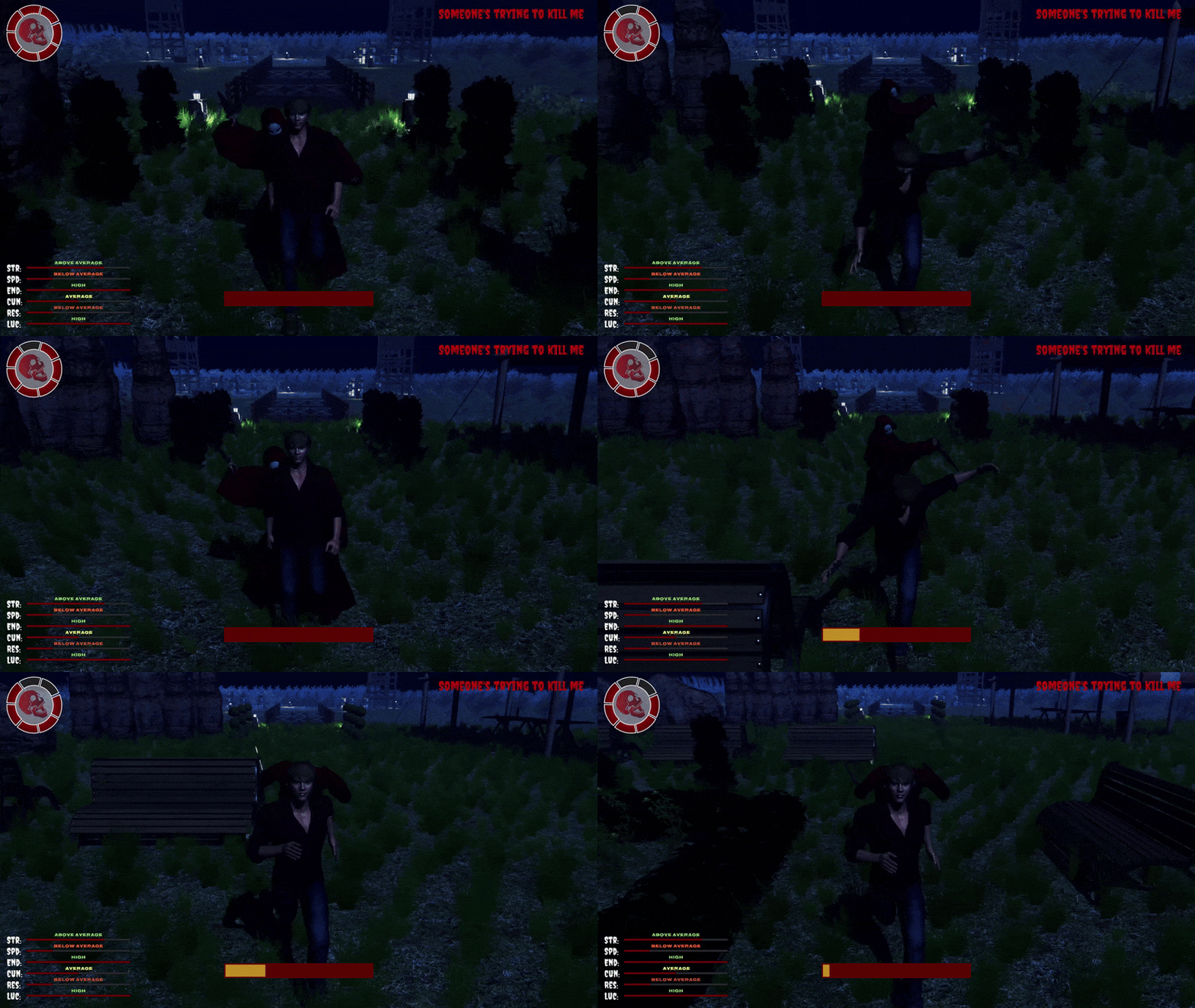
Another minigame; It triggers when the enemy is about to land a killing blow on the player and only triggers once. The struggle battle is a last-ditch effort for the player to save themselves before game over.
The player and enemy have a strength meter that gradually depletes. Each are allowed actions to deplete the other’s strength. The player must watch the enemy’s posture and use either a lower body or upper body attack at the correct moment. The player also has actions to dodge lower and upper body attacks from the enemy.
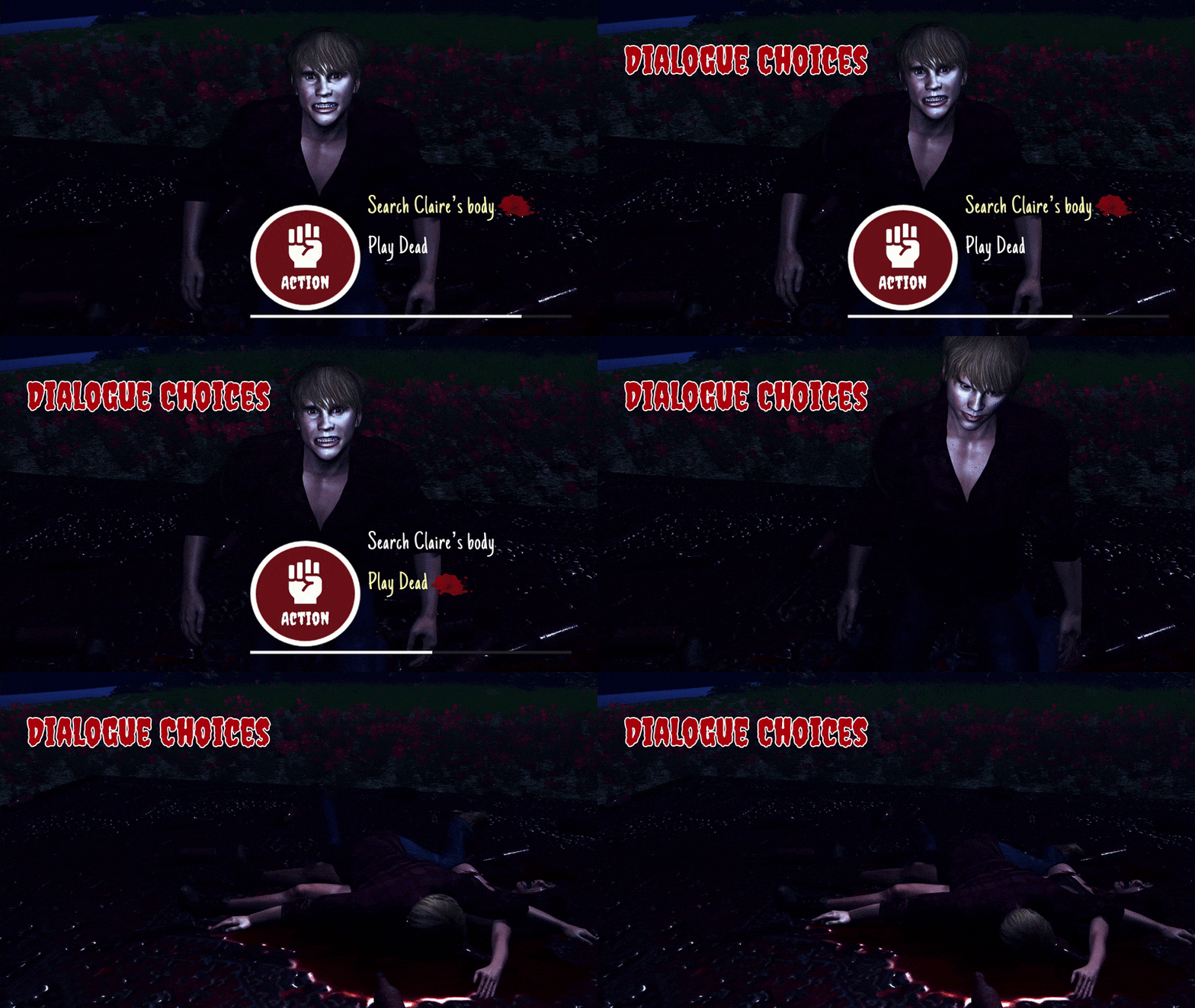
The game’s narrative is branching, and I needed to implement a system to support that. A Cinematic or dialogue manager script will trigger the corresponding cinematic/dialogue based on requirements such as past decisions made, clues obtained, and key items in inventory.
All necessary data is serialized and stored in a text file which can be read from and used to load the player’s progress.
A quest system that tracks the completed story objectives, assigns the next objective, and raises necessary events upon quest or objective completion.
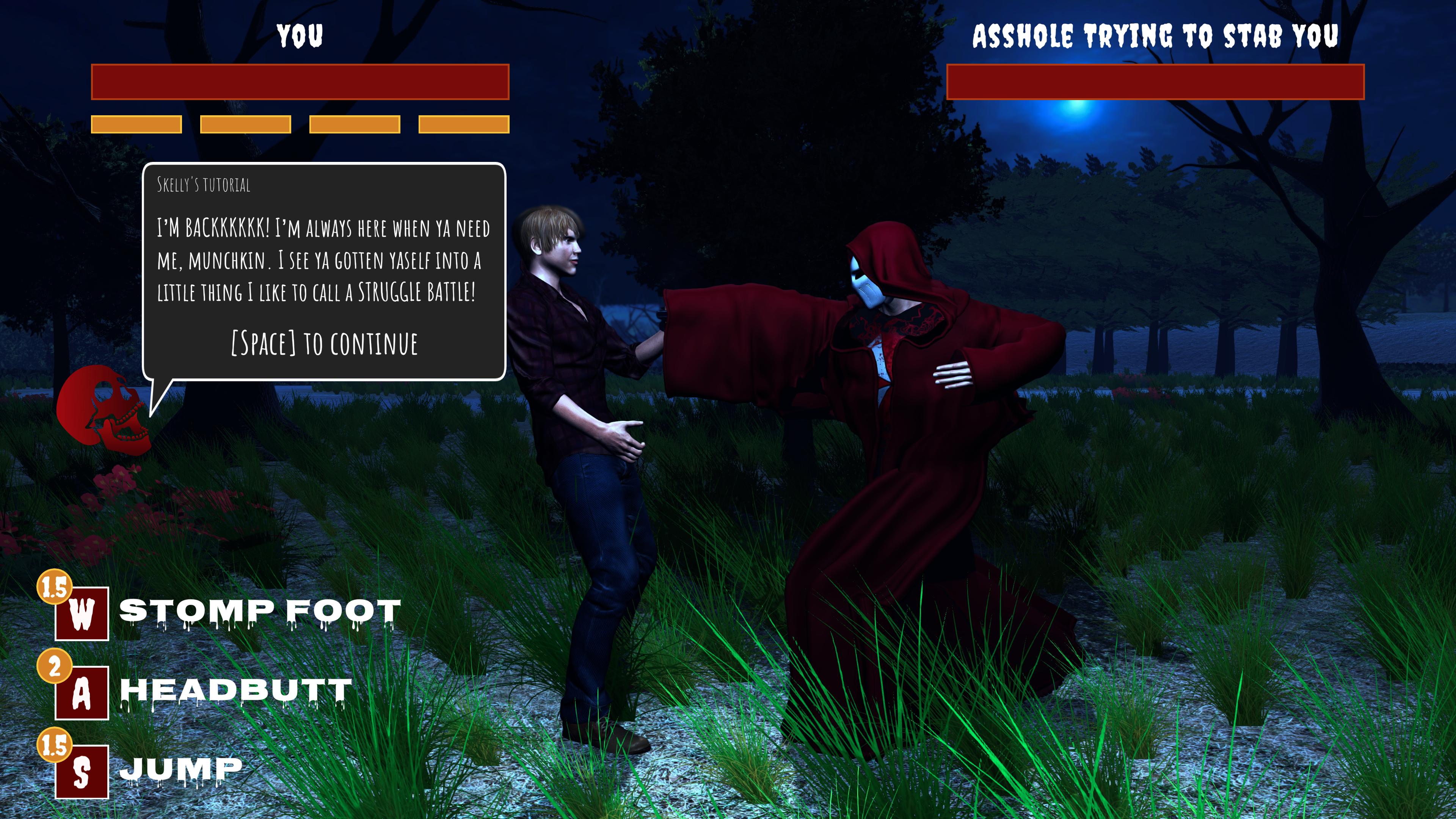
The tutorial system adapts the controls to display depending on the player’s connected input device.
Therefore, even if player is playing on PC but is using a PlayStation controller, the tutorial system will detect this and display the respective controls and revert to PC controls when controller is disconnected.
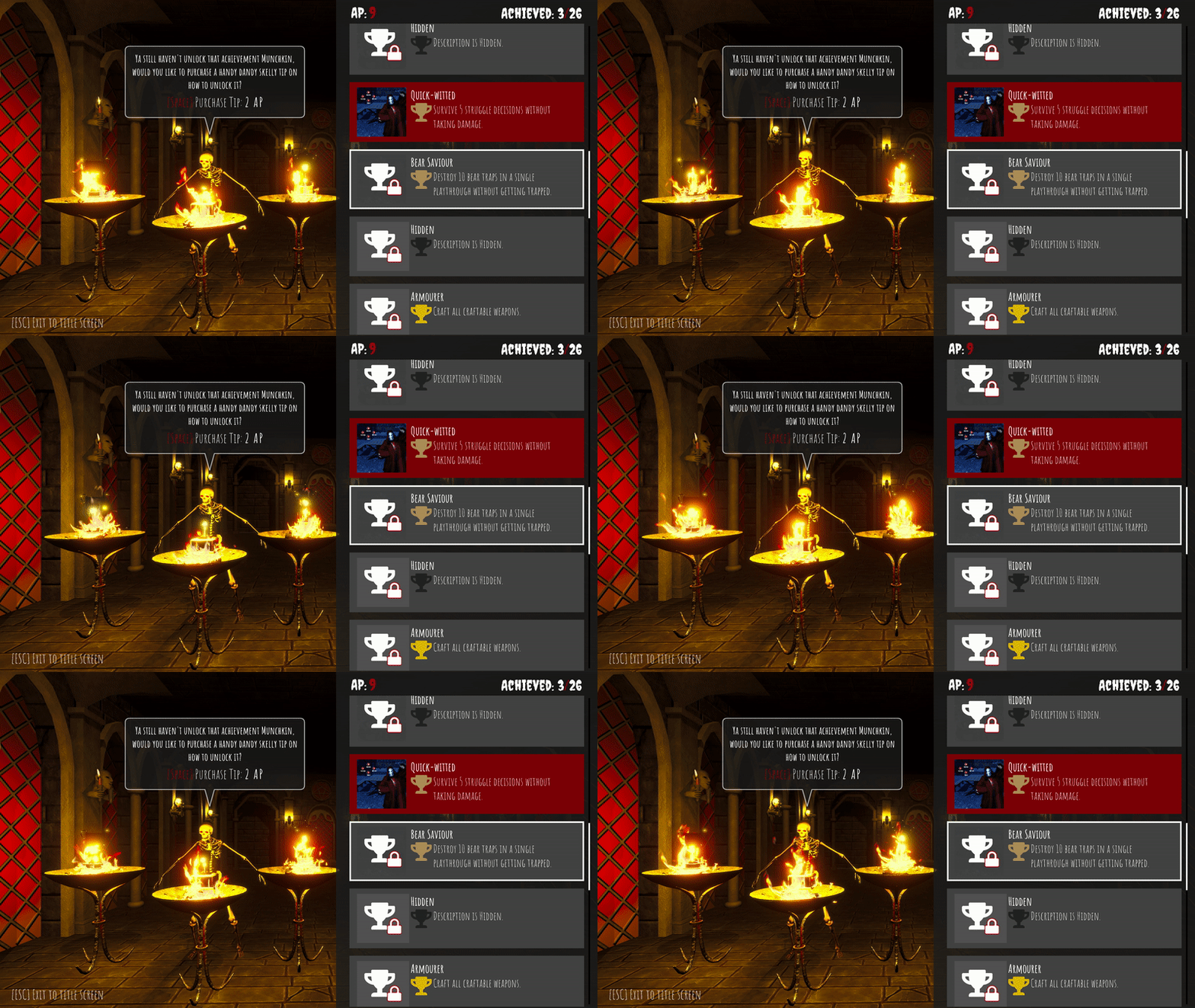
When player completes a specific action, the achievement event is raised, and an achievement is unlocked.
Achievements are stored in a separate save file along with the game settings so they can be carried through multiple playthroughs.
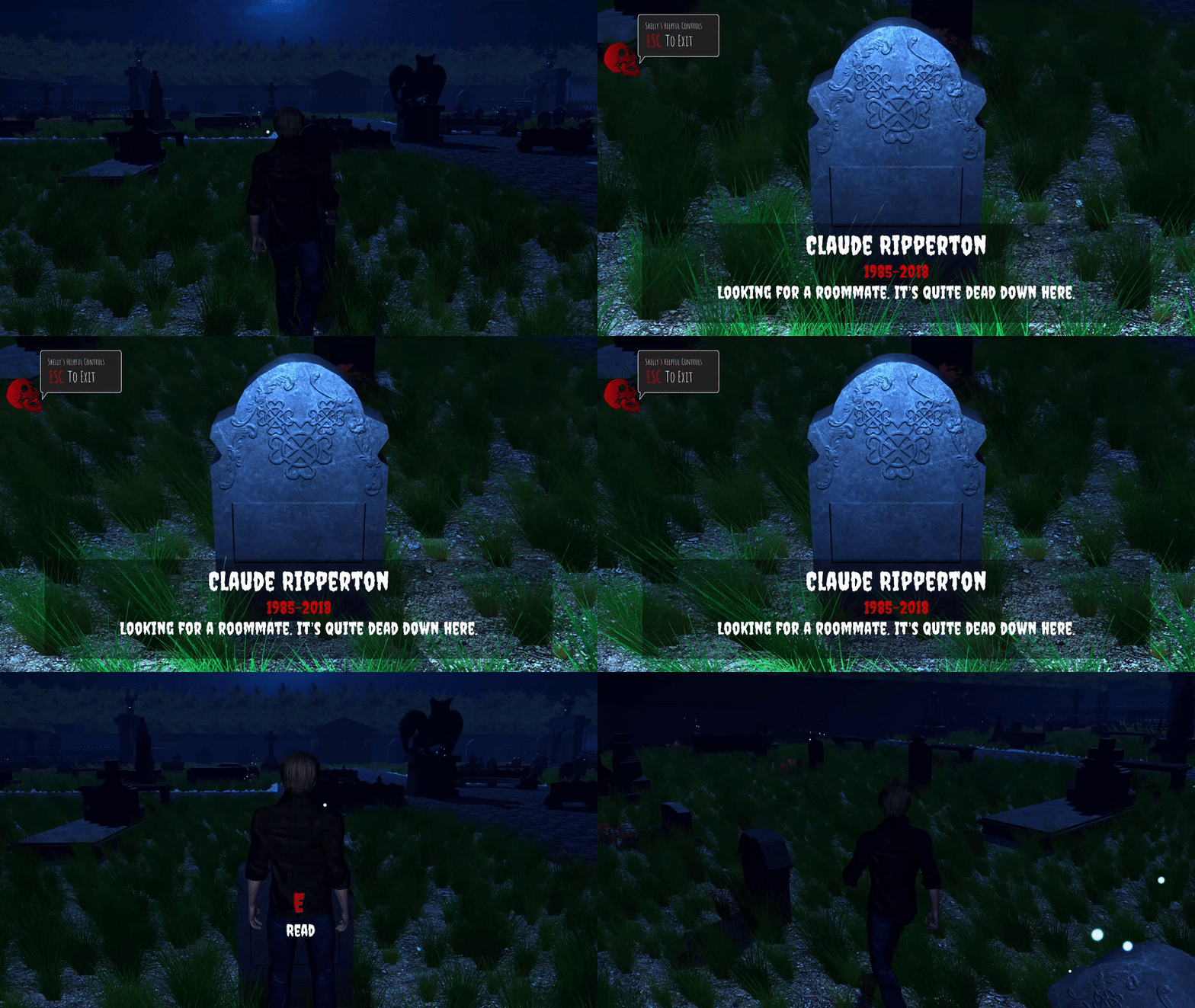
A system that allows player to interact with items in the environment (Hiding spots, crafting components, campfire) by determining when the player has entered its radius and if the player is looking at it.
The system can handle when the player is within the radii of two items and will choose the item closest to the player as the valid interaction.
The system makes use of inheritance so each class can handle interaction differently. E.G A weapon equips itself to the player on interaction whilst a tent allows the player to hide inside.
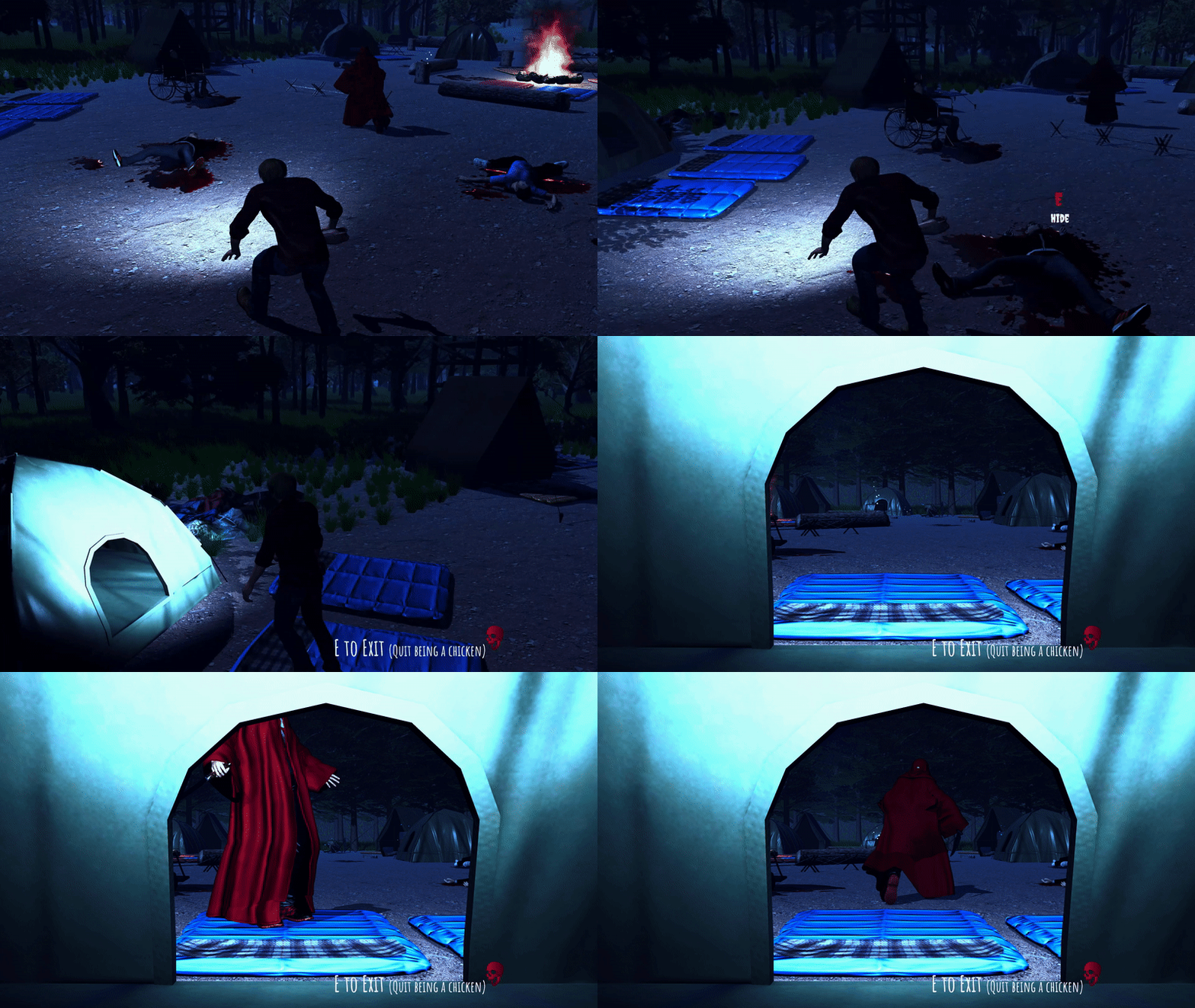
I designed the concept that there are various ways to evade the killer and how the character’s stats determine the effectiveness of each method.
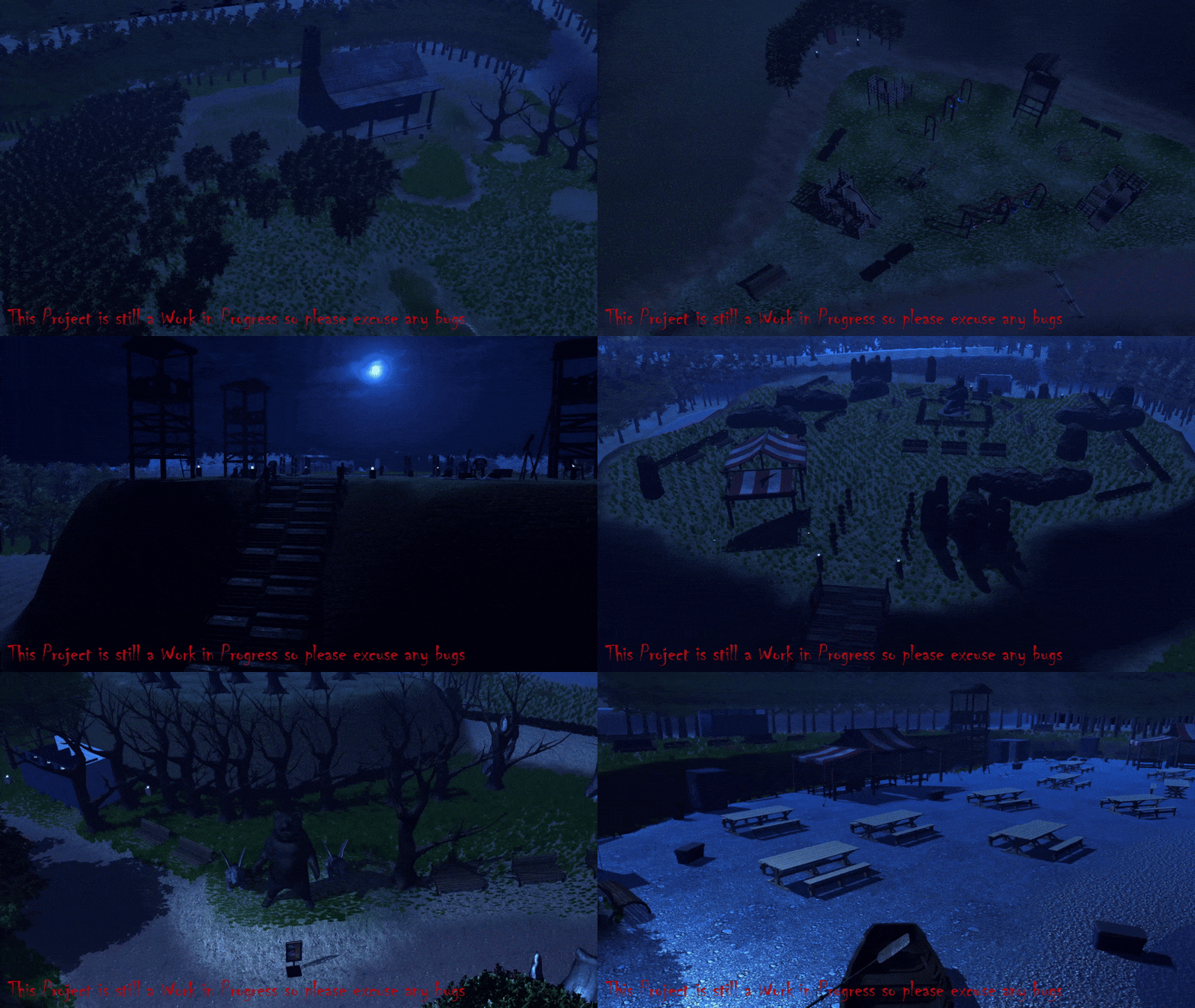
An open-world filled with secrets that encourages player to deviate from the main path to obtain clues, powerful weapons, and side-quests. Additionally, props were meticulously placed with environmental storytelling in mind. The player should be able to discern what occurred at an area just by absorbing the detail.
I designed the weapon’s durability, damage and components required to craft it. I balanced them by making more powerful weapons required rarer or more components to craft. To encourage exploration, powerful weapons were tucked away in secret areas. Such as a sword hidden in a cemetery behind a gate that requires a key to open.
The side quests were designed to support the player such as a side quest to cook raw steak on the campfire that would fully restore the player’s health. Also, a side quest where the objectives are completed by unlocking clues that could lead to the player confronting the killer and unlocking a secret ending.
Unlocking an achievement rewards the player with points that allows them to purchase a tip on a locked achievement.
This game has many secrets, and this design encourages player to see all secrets in the game.
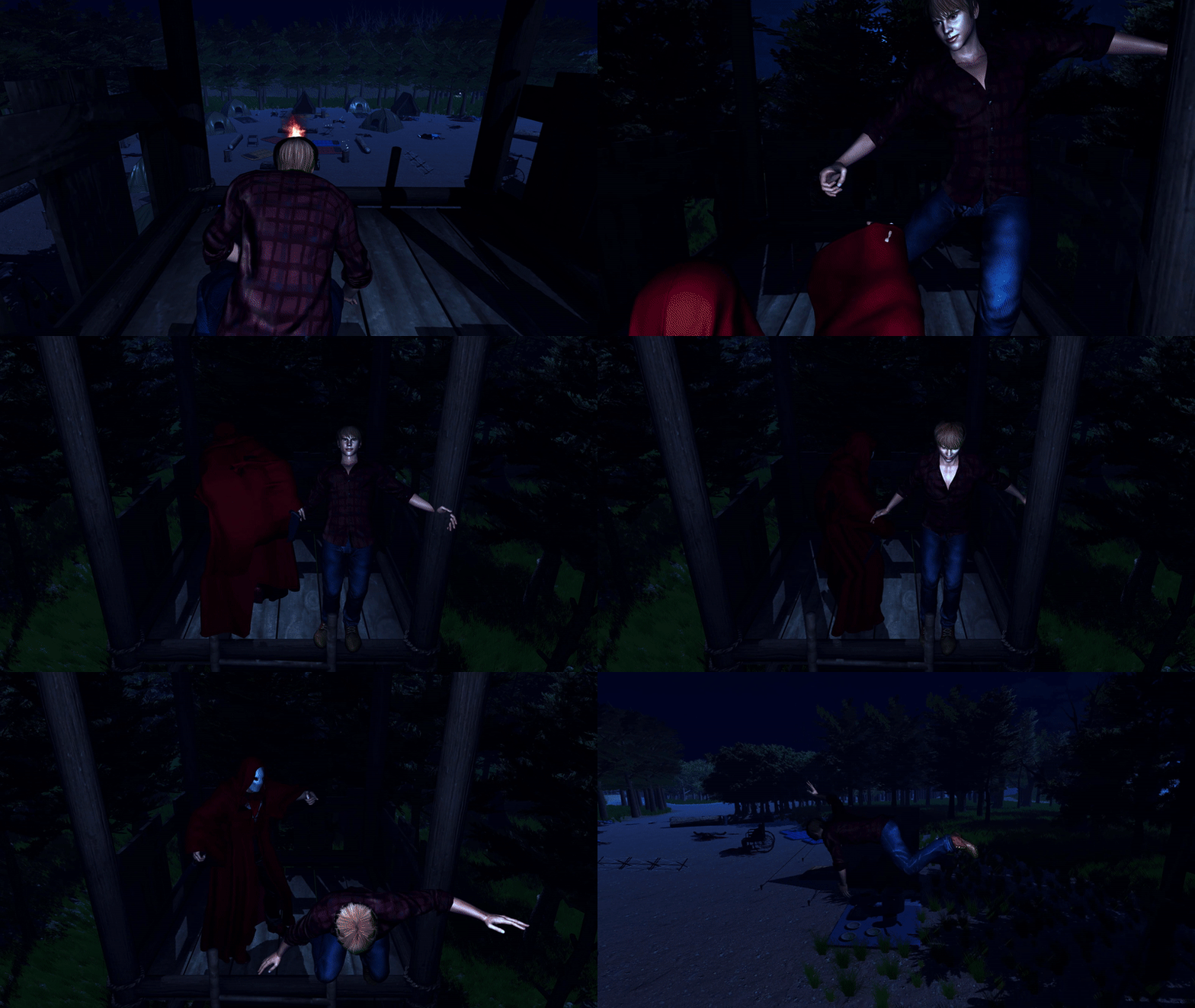
I designed and implemented all the game’s cinematics with Unity Timeline. Additionally, I hooked up events triggered by dialogue during the cinematics.
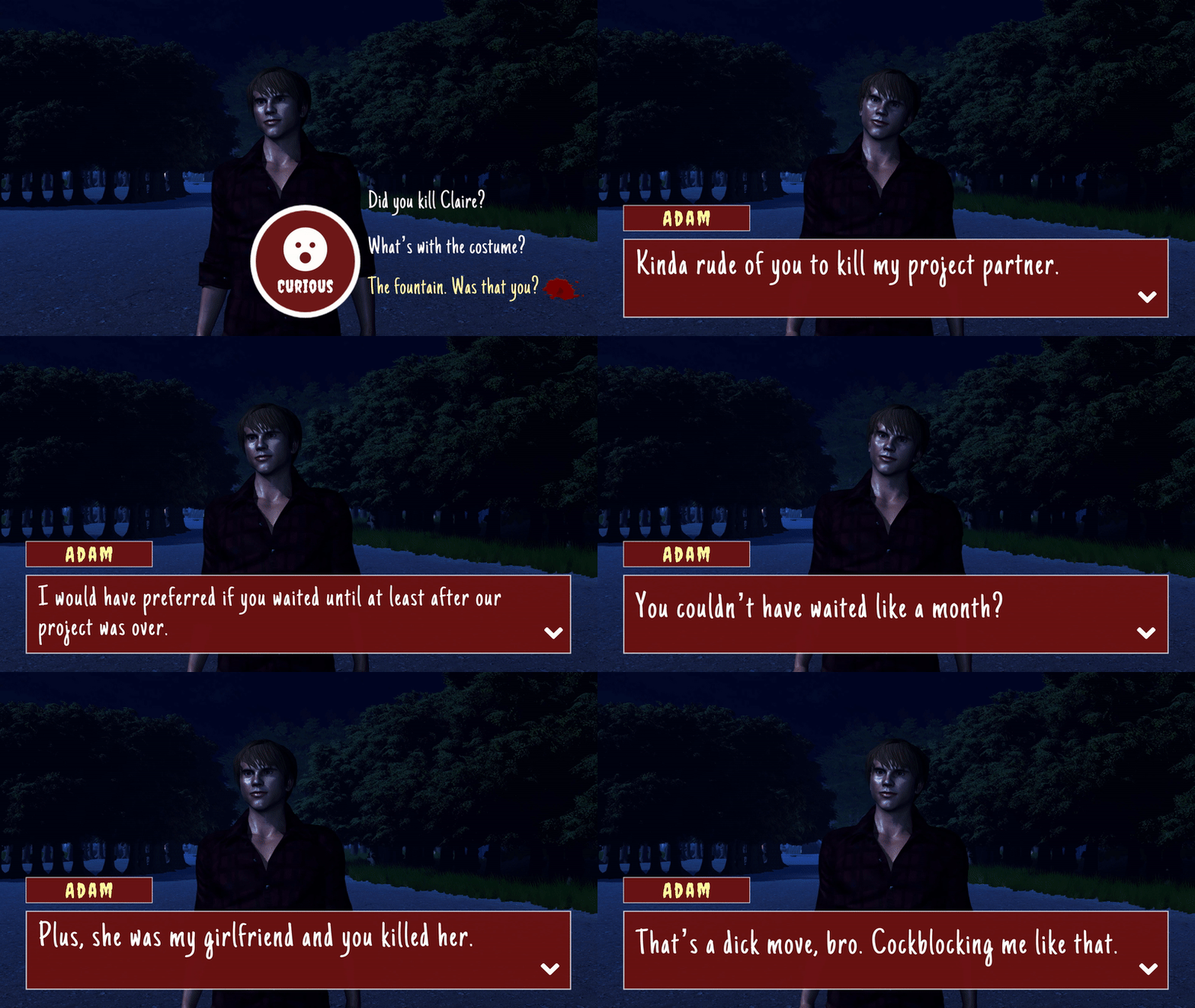
I wrote the unserious and silly dialogue of the game to emphasis it’s goofy nature.
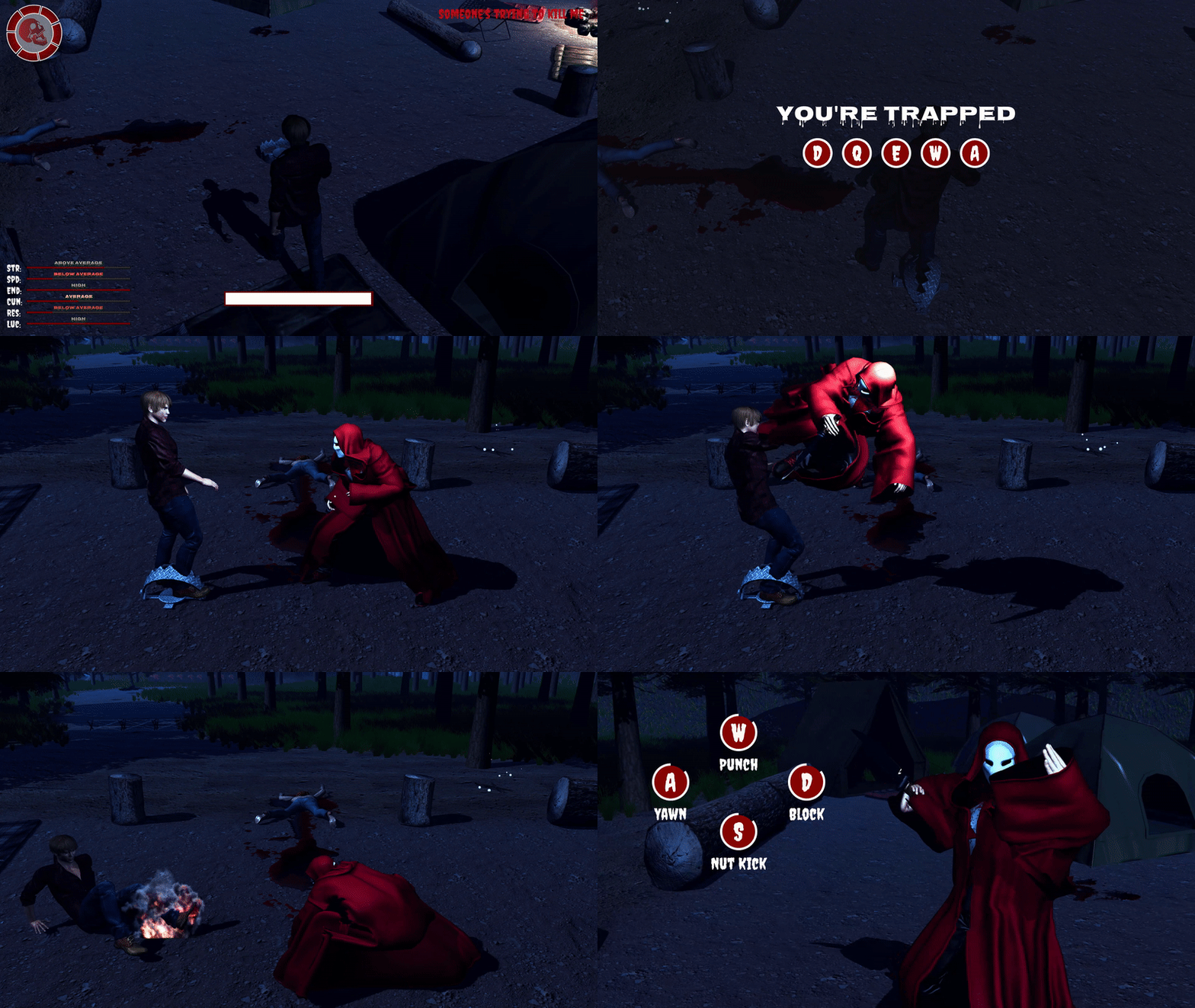
I designed traps to act as environmental obstacles and force the player to pay more attention to their surroundings especially when running from the killer.
The in-game apps are parodies of real-world apps. Thus, I designed the app UI and app logos to illustrate that.
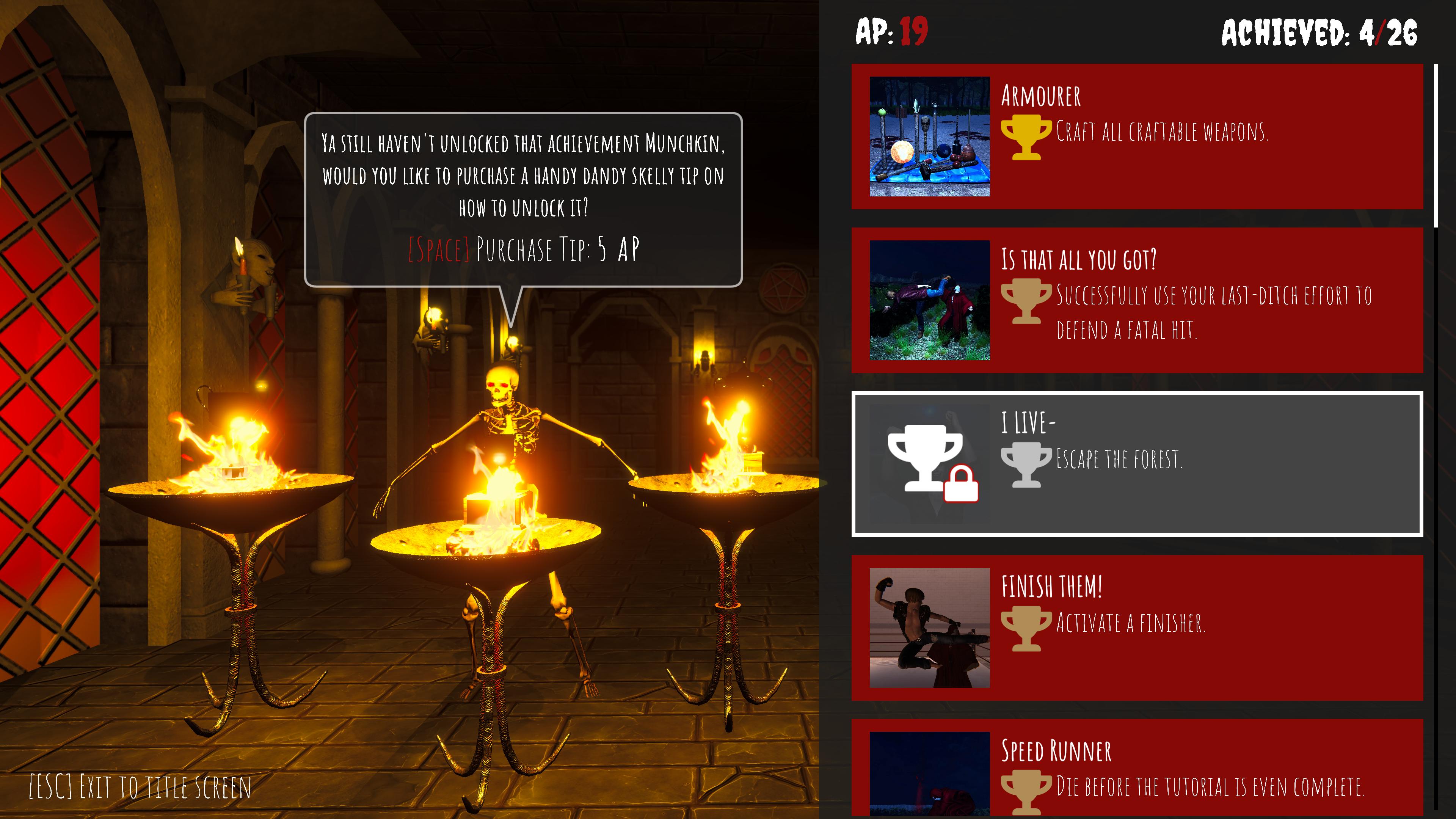
I designed the HUD and all the UI in the game.
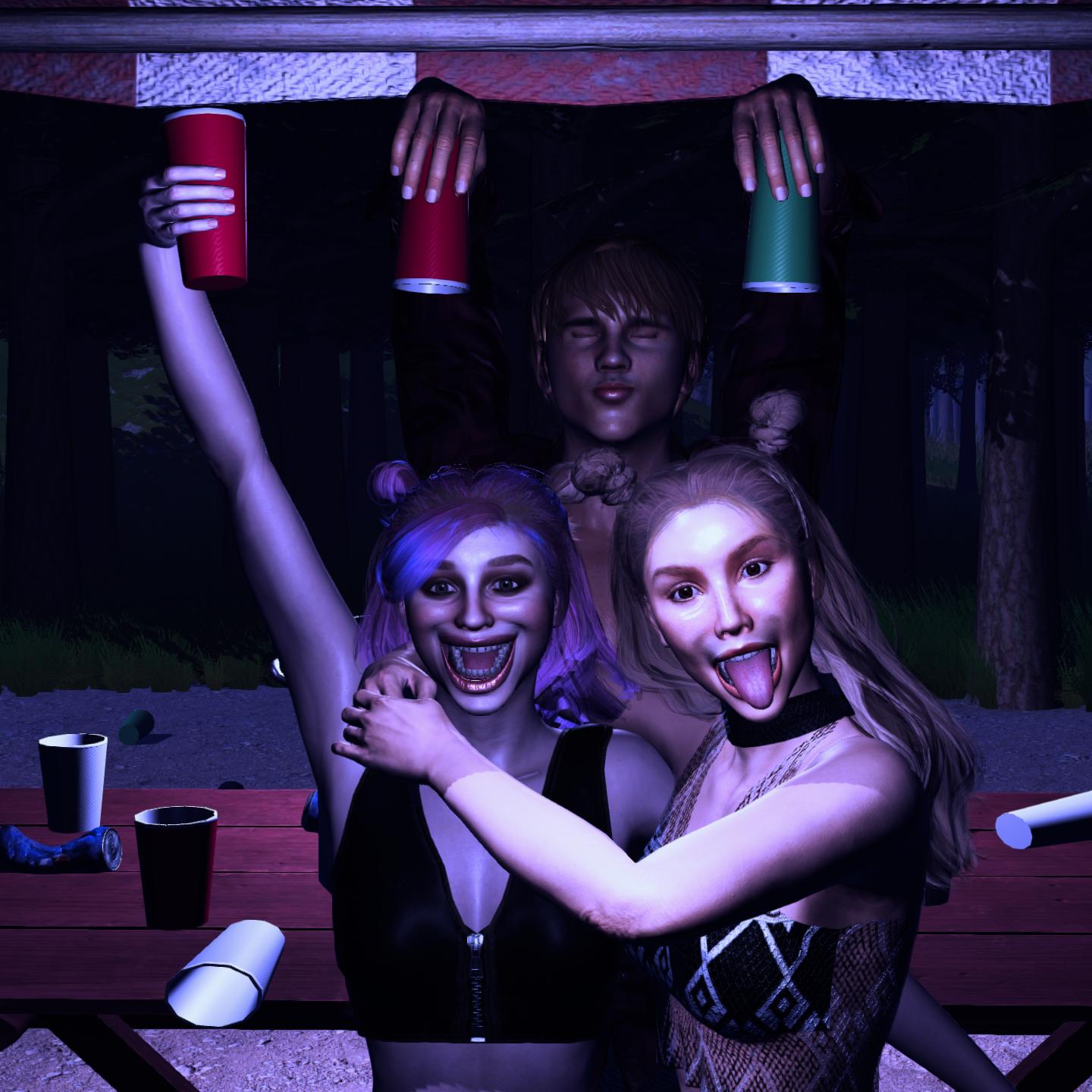
I designed photos for the in-game social media apps with the intent to tell a story. The photos are meant to depict the relationship between characters and provide insight into their personalities. Thus, I had to design photo sets to achieve this.
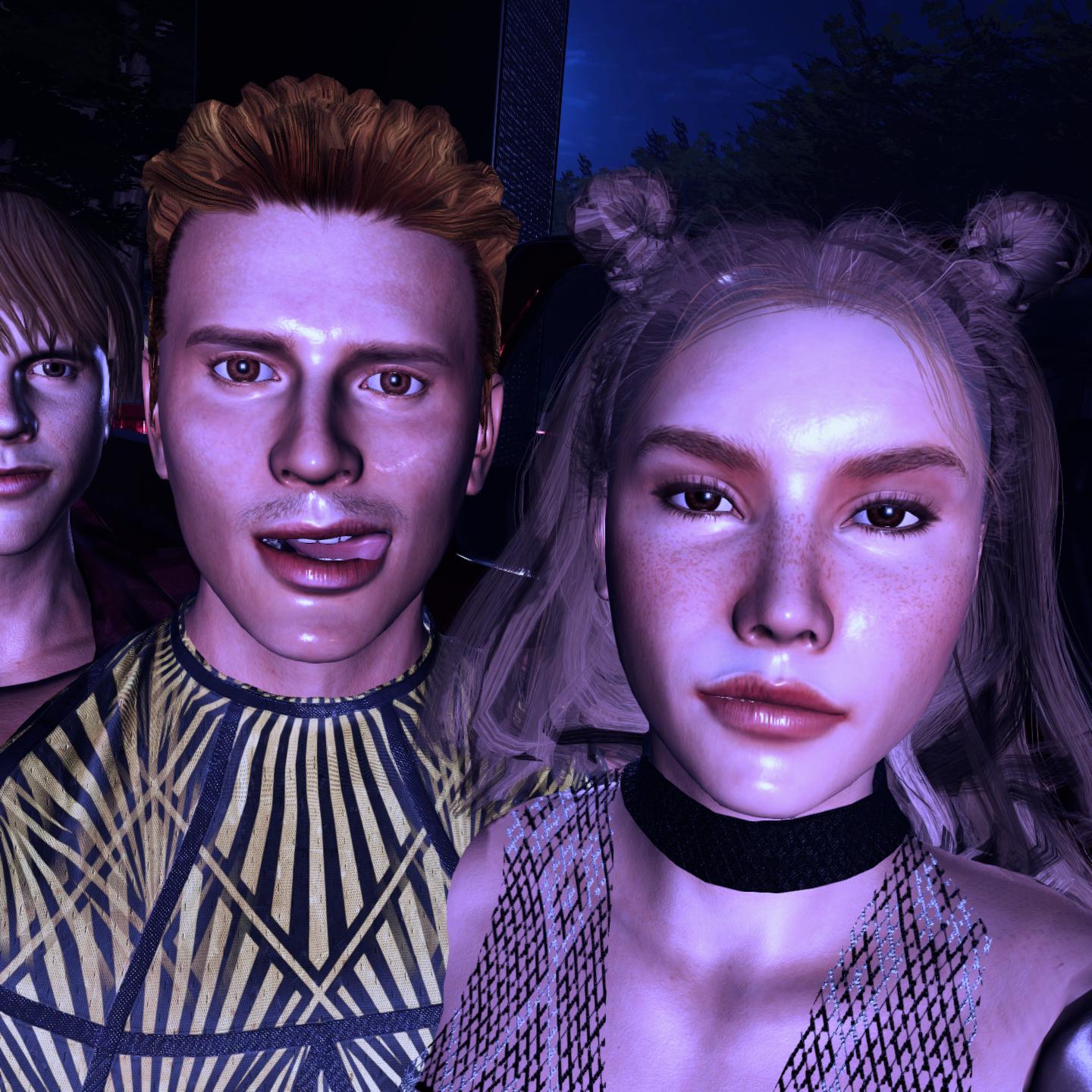
I modelled all the characters in Character Creator 3 using celebrity photos as references.
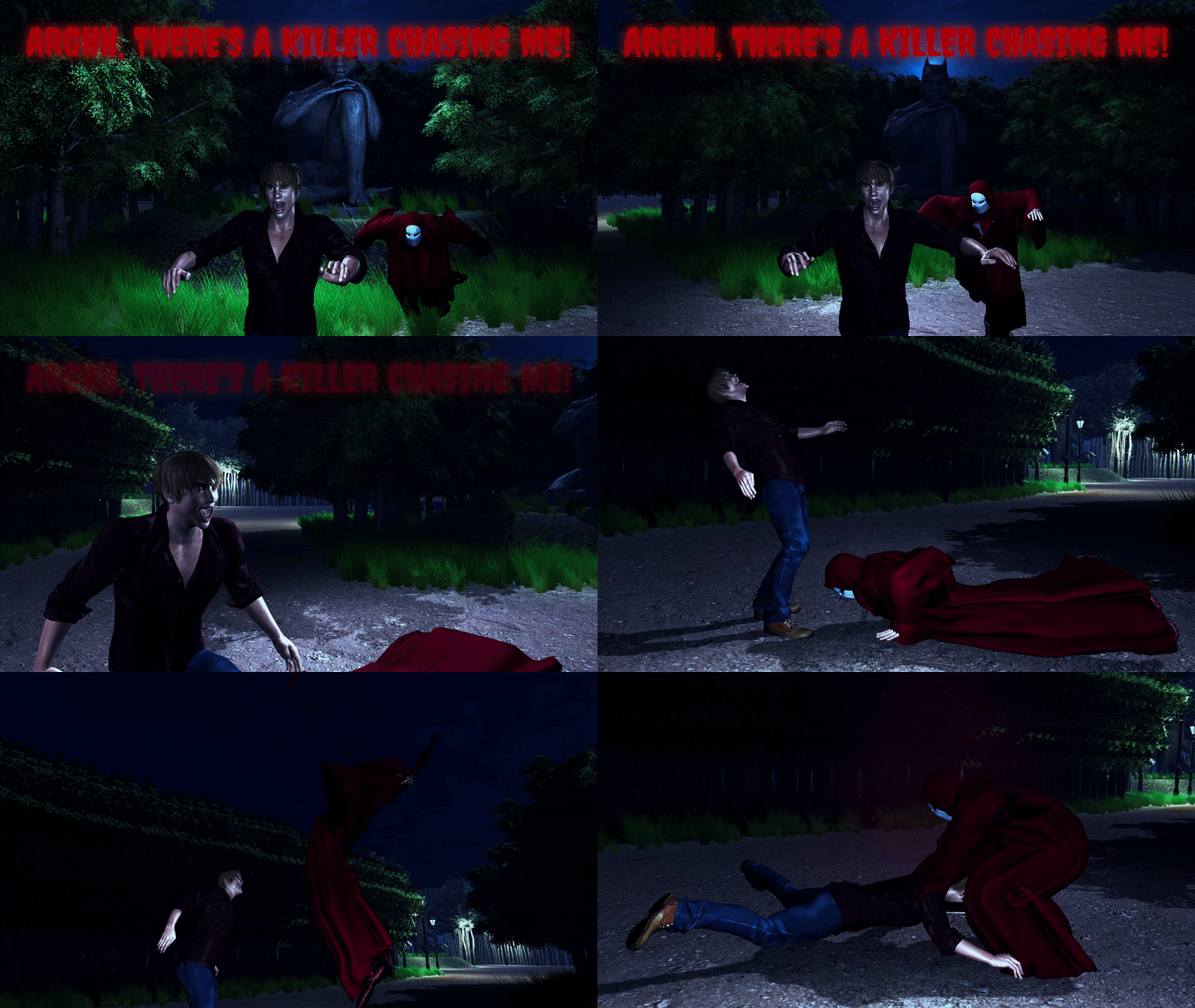
I created promo posters to market the game and sell its goofy nature.
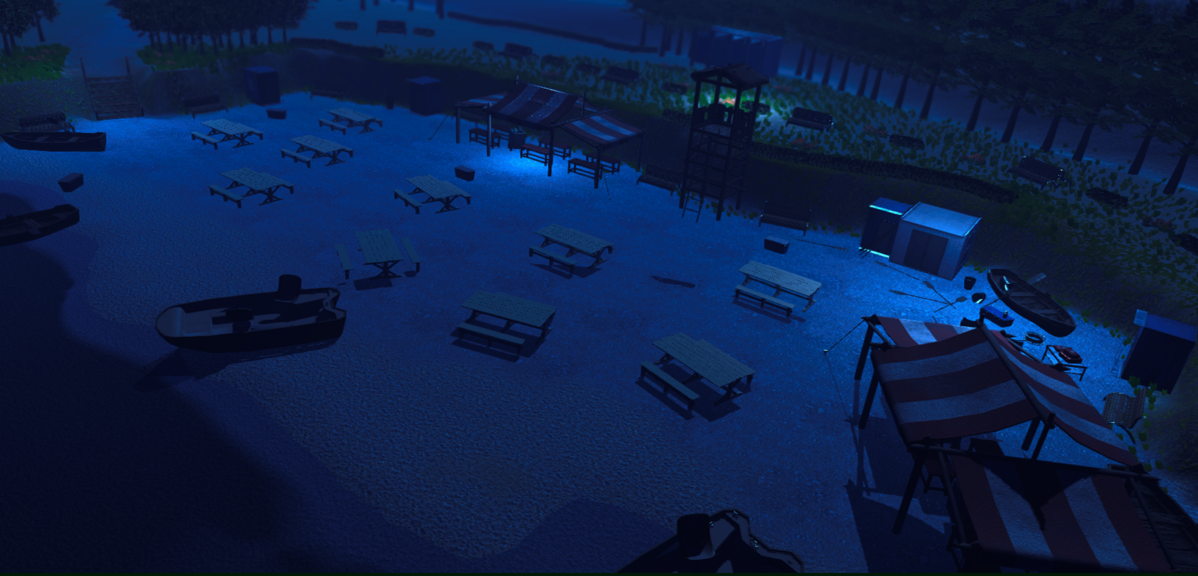
Using Unity’s URP Post-processing package to apply a dark, spooky, and menacing atmosphere to the level.
reneetide@gmail.com